
Categories
Christmas Grief Grief & Hope

The Weight Christmas Can Bring

When I think of Christmas prior to 2017, I immediately think of being back at home, so excited for the “Family Hamper” to arrive, and then waiting for everyone to be home so we could open it together and see what was inside.
I remember going to see The Muppets Christmas Carol with my dad and brother, hearing the Salvation Army Brass Band playing carols in the town centre, watching National Lampoon’s Christmas Vacation, and having the whole family round on Christmas Day.
I could honestly write a whole blog just on the warm and lovely memories I have of the build-up to Christmas and the day itself.

I also remember the harder times, when I felt pulled between going out with friends or spending time with family.

Life changed for us as a family in August 2017 when my mam passed away. Life as I knew it changed forever.
As time went on, I found myself surrounded by twinkling lights, Hallmark films, laughter, love, and happiness. My mam loved Christmas, so her absence was and still is greatly missed during this season (and always).

I believe that events that happen annually, like Christmas and birthdays, can bring a new wave of grief each year. Although we’re told that time is a healer, from my own personal experience, that’s not the case when it comes to losing someone you love.

The First Christmas Without Mam

If I could have gone to sleep or just skipped the first Christmas without Mam, I absolutely would have taken that option.
The pressure to put on a “brave face” was really felt, and I’m sure my family felt the same too.

We spent Christmas at my brother and sister-in-law’s house, a place where we’d shared many happy memories together.
After opening gifts, I took a moment to myself. While showering, I found myself talking out loud to my mam. I told her I was struggling and didn’t know how I was going to get through the rest of the day.
As I reached for the shampoo, I happened to glance at the name on the bottle. It read, “Bee Strong.”

I laughed when I saw it. I absolutely believe this was a message from my mam, offering comfort and support in any way she could.
Although the sadness and weight of loss didn’t disappear, I felt comforted knowing she was around us, not in person but in spirit. The day felt that bit easier, and I felt I’d been given permission to try and enjoy it.

Even though the day was a constant reminder that someone so important was missing from the family table, I felt comforted knowing Mam was still with me, just in a different way now. And somehow, that made things feel okay.

The Nature of Grief It Comes in Waves

I smiled when I came up with this title for this section. In my mind, I said, “Wave? More like tsunami.”

One thing I’ve learned from my own experience of loss is that grief isn’t a straight line. The stages of grief can give us an idea of what we might feel, but the reality is far messier. For me, it definitely wasn’t straightforward.

Imagine a shoreline with calm, gentle waves and the soothing sound of the sea. Then suddenly, a huge wave crashes in and takes you by surprise. That’s what grief feels like to me. It creeps up unexpectedly and can completely take you off guard.

Julia Samuel talks about this in her book This Too Shall Pass, describing how grief isn’t linear and can come in waves. I absolutely felt that on Christmas Day. One moment we were pulling crackers, and the next I was overwhelmed with sadness, missing my mam’s homemade stuffing balls.

That feeling didn’t magically disappear on Boxing Day. I still experience waves of grief now, even eight years later. Just like the sea, when the waves roll in, they bring things up from the seabed, feelings, memories, and moments that you might not have seen or felt for a long time.

The Stages of Grief

Elisabeth Kübler-Ross’s model, the Stages of Grief, describes what we might experience during loss. Although this blog focuses on the loss of a loved one, these stages can also apply to other types of loss such as a job, a friendship, a relationship, or even a sense of identity. Change itself can bring grief.

Denial: “This can’t be happening.”
A sense of disbelief or shock that helps buffer the initial pain.

Anger: “Why is this happening? It’s not fair.”
Anger can be directed at people, situations, or even the person who died. It’s a natural response to feeling powerless and hurt.

Bargaining: “If only I had done this…”
A stage filled with “what ifs” and “if onlys.” It’s a way of trying to regain control when everything feels uncertain.

Depression: Deep sadness and withdrawal.
The reality of the loss sets in, and emotions can feel heavy or overwhelming.

Acceptance: “This has happened, and I can find a way to live with it.”
Acceptance doesn’t mean being “over it.” It’s about acknowledging the loss and learning to live alongside it.

What I learned pretty quickly is that grief isn’t linear. Everyone’s experience is different, even if you’re grieving the same person or situation.

I skipped denial and spent months feeling angry at the world, myself, even my mam. How dare she leave me? Some days I found acceptance with a sprinkle of anger. Other days I felt nothing. Even now, I still move in and out of these stages, maybe not for as long, but it still happens.

This isn’t a race to get to the end of the stages. In my experience, that’s not how it works. It’s about learning to live again with the loss, giving it space, time, and respect.

I’m not sure I’ve fully accepted that Mam isn’t here anymore. Maybe that’s because I still feel her in other ways, in rainbows, in sunrises, in the smell of her perfume, or even in that shampoo bottle on Christmas Day.

When Christmas comes around, I’m reminded that grief doesn’t stick to dates or seasons. It sneaks up when you least expect it, in a song, a smell, or while you’re laughing with loved ones. That first Christmas without her felt like a wave I couldn’t outrun. Even now, there are moments that catch me off guard. Over time though, I’ve realised those waves are really just love showing up in a different way, little reminders that she’s still around, just not how she used to be.

Finding Meaning and Continuing Bonds

Noticing the message my mam was sending me on Christmas Day in 2017 was a turning point. It made me pause and reflect, to recognise my strength, my journey, and the amazing people around me who offered love and support. They helped me maintain that continued bond with my mam.

I truly believe she was showing me that she’s still present. She just can’t send messages or give hugs in the same way anymore. I just have to look a little harder to notice the love she’s still sending.

I also like to think she has a bit of FOMO, fear of missing out, so she has no choice but to stay present with us.

Seeing her message, “Bee Strong,” reminded me that our bond wasn’t broken. Her love for me is still here. She’s still on my team, and that presence is enough.

Time Isn’t a Healer

I’d love to tell you that time is a healer, but honestly, I don’t believe it is. Time gives us space to reflect, to learn, and to find new ways to cope, but it doesn’t take the pain away. There isn’t a magic moment when the grief fades. Sadly, no Dumbledore appears on the first anniversary to wave a wand and heal your heart.

What time does is allow us to adjust. To stop reaching for the phone to share something, though I still do that even now. To find a new rhythm. To start living again, even with the ache.

I’ve learned that life doesn’t stand still, and if we want to keep living, we have to find our own way to move forward. For me, that meant laughter, lots of it. I’ve developed a dark sense of humour, and it’s helped me more than I can say. Finding joy and humour, even in the darkness, has been a big part of my healing.

This ties in beautifully with Person Centred Counselling, acceptance, empathy, and finding ways to keep growing into the best version of ourselves, even through grief. Julia Samuel talks about this too, describing themes of compassion, acceptance, and growth through loss.

Closing Reflection

With the support of my partner, amazing family, and wonderful friends, I’ve learnt to find joy in Christmas again. I love the lights, the warmth, the carols, the cheesy films, and of course, the food and drink. To sound a little cheesy, and honestly, who doesn’t love cheese at Christmas, the true meaning of this season for me is family, friends, remembering those who can’t physically sit at the table, and continuing the traditions they created.

Christmas will always carry a little ache for me, and I’m learning that that’s okay. Grief can feel like love with nowhere to go, but I’ve found that love still finds a way to reach us. Maybe through a song, a smell, or even a shampoo bottle whispering, “Bee Strong.”

So that is how I want to sign off this blog, during a time of year that can feel difficult, strained, and triggering. Bee Strong, and Bee Kind to yourself.

Categories
Community Mental Health Person Centred Counselling

In a World Where You Can Be Anything: Kindness in and Beyond the Counselling Room

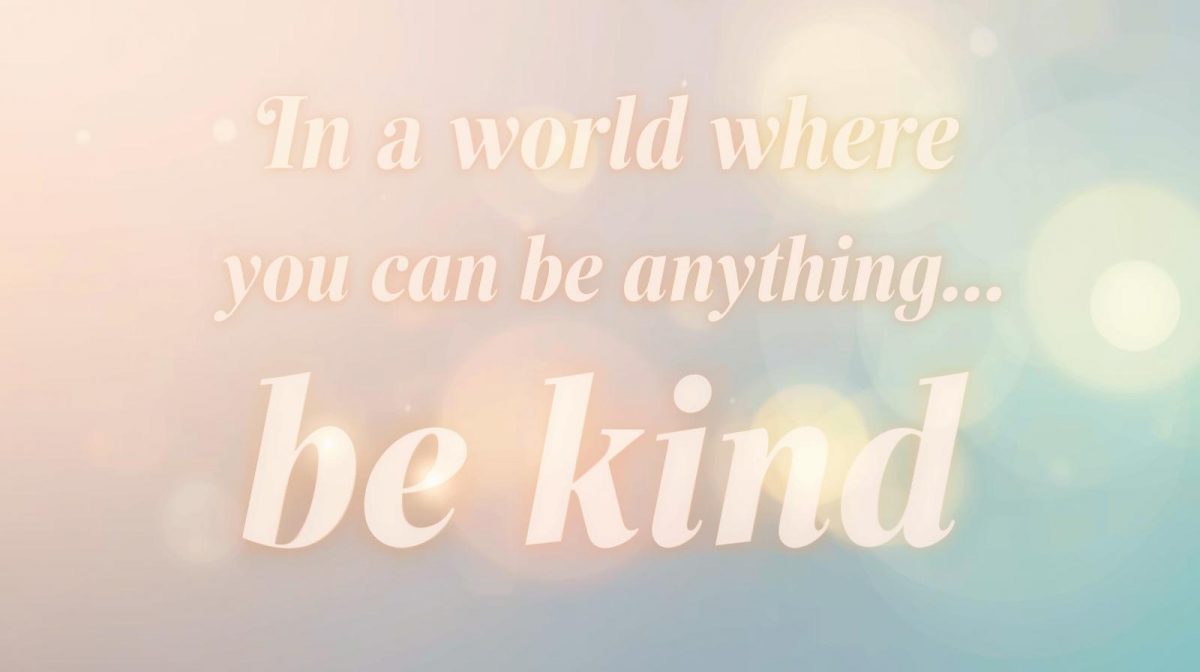
I watched the new Caroline Flack documentary recently, and ironically, as I write this blog, it is also World Kindness Day. One of the messages she left behind , one that continues to echo for many people, is the reminder: “In a world where you can be anything… be kind.”

As a human being and a person-centred counsellor, kindness and empathy are central to the way I try to move through the world. I offer these values to others, and  myself too. Yet we live in a world where kindness isn’t always freely given, whether in person or online. We rarely know what is happening for someone else. On the surface they may beam with a beautiful smile, yet beneath it something entirely different may be unfolding.

Some of us now live our lives through the lens of a camera, especially when our work depends on visibility. That visibility brings connection, creativity, and opportunity, but also vulnerability. It leaves people open to judgement, assumptions, and sometimes even threats. It can feel claustrophobic. And as easy as it is to be pulled into sharing an opinion, it’s equally easy to slip into doom scrolling, absorbing what people appear to think about “you.” But are they seeing you at all? Or just a single, curated sliver?

This is the opposite of what happens in the counselling room. There, you are welcomed exactly as you are. No judgement. No expectations. No conditions. Within the person-centred approach, unconditional positive regard, empathy, and congruence shape the relationship. For an hour, clients can be themselves: honest, vulnerable, free from the pressure to perform. They are met with understanding, not assumptions.

As opinions travel faster than compassion, days like World Kindness Day ask us to pause and truly see another person.

Behind the Screen

We’ve all scrolled through social media and thought:
“They look so happy… I wish my life was like that,” or
“Their job must be amazing; everything seems so easy.”

I’ve had those thoughts too.

But I often wonder what life feels like once the camera is off. What remains when the door closes, the makeup is removed, and the smiling public persona fades? Because mental health exists there too,behind the filters, behind the edited clips, behind the headlines.

Public figures carry the weight of being watched and commented on by strangers. The pressure to perform or appear “OK” must be exhausting. Scrutiny from trolls, fans, and media stories built from fragments creates a world where privacy can feel shaky, and safety uncertain. A curated smile doesn’t protect against loneliness, anxiety, or vulnerability. Those parts rarely make it into the final cut.

Fragmented Stories: What We Don’t See

Social media gives us connection, but it also gives people permission to judge quickly and loudly. Recently, I’ve noticed how easily we slip into becoming online detectives or critics, even when we know almost nothing about the person behind the post.

I often use the analogy that our story is like a jigsaw puzzle: it takes many pieces to show the full picture. And when pieces are missing, the image can’t be fully understood.

Online, we see only the pieces people choose to show often not the most important ones. The media may see only 10 pieces of a 100-piece puzzle, yet from those few fragments, entire narratives are created. The gaps get filled with assumptions or speculation, sometimes even fiction. This creates conflict, misunderstanding, and unnecessary hurt.

And I often wonder whether the people crafting these narratives truly pause to consider their human impact.

Parallels with the Counselling Room

Here, the contrast to counselling becomes even clearer. In therapy, instead of judging based on fragments, we explore the full picture gently, at the client’s pace.

Person-centred counselling offers:

  • Unconditional Positive Regard: acceptance without performance

  • Empathy: entering someone’s inner world without presumption

  • Congruence: a genuine, honest presence

Clients don’t have to curate a version of themselves that makes sense to others. They can show the hidden pieces of their puzzle, even the ones they’ve avoided. The messy pieces. The painful ones. The uncertain ones.

In a world that judges instantly, the counselling room becomes a rare space where someone is truly seen.

What Does Kindness Mean to You?

I often return to this question: What does kindness mean to you?

To me, kindness is not a hashtag or a performance. It isn’t dependent on whether someone “deserves” it. It’s a way of living  a practice.

Kindness means offering gentleness even when it isn’t returned. It means remembering that I have no idea what someone else is carrying beneath the surface. And if I can offer compassion, I hope it might make even a small difference to their day.

As I’ve grown older, I’ve realised kindness looks like:

  • thinking before I speak

  • listening without judgement

  • understanding that we are all different

  • accepting that I will not always get it right

But I try — and I try unconditionally.

A Final Reflection

Writing this has been harder than I expected. There is much more I could say, but I want to speak with care, knowing this topic touches real lives and real pain.

We cannot know every story behind every smile, post, or headline.

But we can choose how we meet those stories, with empathy, patience, and kindness.

And perhaps this is where the counselling room serves as a guide. The way we hold space for clients, gently, without assumptions, without needing the full picture before we offer acceptance, is something we can carry into the world around us.

In a world where you can be anything, let us be kind 
to ourselves, and to others, especially when we cannot see their whole story.

Take care, Nicole


Categories
change, seasons, self reflections

The Seasons of Change: What Autumn Can Teach Us About Growth and Letting Go

Lately, I’ve found myself writing a lot about change — the shifting seasons, the transitions we move through in life, and how we find balance in between. It feels natural at this time of year, when autumn surrounds us with reminders of movement and letting go.

This morning, as I was driving, I noticed how the trees seemed to each be doing their own thing. Some were already bare, their branches thin and open to the sky. Others were glowing in full colour, rich with orange, red, and yellow, like they’d been painted overnight. A few still clung to their green, almost as if they weren’t quite ready to let go of summer.

I smiled to myself because I love this time of year. The crisp air, the low bright sunshine, the way you can sit outside and feel the warmth on your face but still need to wrap up in a coat or a blanket. But it also got me thinking about change, and how differently we all move through it.


Nature’s Way of Showing Us Ourselves

The trees don’t all turn at the same time. They don’t rush each other or look around wondering if they’re falling behind. Each one responds to its own rhythm, to what it needs, to where it’s planted, and to what’s happening around it.

And maybe there’s something in that for us too.

Some of us are in seasons of letting go, shedding old habits, relationships, or ways of thinking. Others are in the middle of transformation, right in the thick of change, glowing with new colour but still uncertain where it’s taking us. And some of us are holding on, staying green a little longer, not quite ready to step into something new.

All of it is okay. All of it is human.

But like the trees, when we’re each experiencing our own version of change, even when it’s the same kind of change, it can sometimes create a sense of disconnect. We move, accept, and learn at different paces, and that can be difficult when those around us are changing in their own way.

Just as the trees share the same soil and weather yet still turn in their own time, we too can be part of the same landscape while moving at different speeds. When this happens, communication becomes so important if we’re able to do so. Reaching out and talking with those who are also experiencing a shift can help us stay connected, even if our colours are changing at different times.

And if those conversations feel too difficult, or if you’re unsure where to begin, speaking with a counsellor can offer a space to gently explore what this season of change means for you — safely, without judgement, and at your own pace.


A Person-Centred Perspective

In my work as a person-centred counsellor, I often see how hard it can be to accept where we are. There’s so much pressure to move on, to get over things, or to embrace change. But those phrases can sound hollow when we’re not ready, or when we’re still figuring things out.

The person-centred approach is all about trusting your own process, much like the natural rhythm of the seasons. Just as the trees know when to hold their leaves and when to let them fall, each of us has an inner wisdom that guides our growth. Some seasons bring colour and transformation, while others ask for rest, reflection, or simply holding on a little longer.

My role as a counsellor isn’t to push or pull that process along, but to offer empathy, acceptance, and genuine presence — a space where you can simply be as you are, without judgement. Like the trees in autumn, when we allow ourselves to be seen and accepted in whatever stage we’re in, change tends to happen naturally. Not because someone told us to, but because we finally feel safe enough to listen to ourselves and grow in our own time.


Sitting with Change

As the seasons shift, you might notice your own inner changes too — subtle ones, perhaps, or big ones that feel unsettling. Maybe you’re letting go of something, maybe you’re standing firm. Either way, it’s worth taking a moment to notice.

What’s falling away for you right now?
What are you holding onto, and why might that still feel important?
And can you allow yourself the same patience and kindness you’d offer a friend — or a tree finding its way through autumn?

Sometimes, the most powerful thing we can do is to pause and pay attention.


A Gentle Ending

Change can be messy. It can be beautiful. It can be slow, quiet, and deeply personal.

The trees remind me that we don’t have to be in the same place as anyone else. We just have to be honest about where we are and trust that, in time, things will shift in their own way.

So as you walk through these autumn days, maybe take a moment to notice what nature is teaching us: that letting go can be graceful, holding on can be necessary, and every stage has its own kind of beauty.

If you feel that talking through what’s going on for you could help, I offer a safe, non-judgemental space as a person-centred counsellor to explore your thoughts, feelings, and experiences. You’re welcome to reach out whenever you feel ready.

Take Care, Nicole