Categories
Grief Grief & Hope Music and Grief

The Light On in the Kitchen: A Person‑Centred Reflection on Music, Grief, and the Places That Hold Us

I always have music on when I’m doing counselling admin. It’s just part of how I work. But it’s more than background noise it’s a companion. A nudge. A reminder. A doorway into memories I didn’t plan on visiting that day.

Some songs don’t just play.

They interrupt.

They stop you mid‑sentence, mid‑email, mid‑life.

They pull you somewhere else entirely.

Sometimes they lift you like the moments where I’m suddenly stood in the kitchen, deodorant can in hand, performing like I’m on a West End stage. No audience. No spotlight. Just me, the music, and whatever emotion has decided to show up. Those moments feel silly and joyful and alive.

And then there are the songs that drop you straight into memory.

Recently, songs like The Climb (originally Miley Cyrus, but Jessi Alexander’s version hits differently), Remember Me Beautiful (Brandy Clark), and Love That Makes a Cup of Tea (Gretchen Peters) have done exactly that. They’ve taken me straight back to my mam not in a dramatic, cinematic way, but in the small, everyday ways grief tends to work. The kind of memories that sit quietly until something wakes them.

And Love That Makes a Cup of Tea brings me right back to something very Yorkshire because here, everything can be softened with a hug, a brew, and a biccie. It’s practically a coping strategy. A cultural reflex. A way of saying “I see you” without needing any fancy words.

That’s how my mam loved people. Through the kettle. Through food. Through the kitchen the hub of the house. The place where warmth lived. The place where I’d sit pretending not to listen while she and her best friend talked about life.

Even the things that annoyed me as a teenager have become precious.

Like the tap on the boiler pipes that ran through my bedroom wall  her way of saying tea was ready or I was needed to dry up. I’d roll my eyes then. Now? I’d give anything to hear that tap again. It’s funny how grief turns irritations into heirlooms.

As my life has shifted, I’ve found myself recreating what she built. Not consciously. Not as a tribute. Just naturally through baking, cooking tea, chatting with friends at the kitchen tablet, leaving the light on, and playing music that pulls me into memory. My kitchen has become a place she would love. And a place where I feel close to her.

And that’s exactly why Light On in the Kitchen (Ashley McBryde) hits so deeply. Because our kitchen wasn’t just a room it was always open. The light was always on. Someone was always ready to put the kettle on, pull out a chair, and let you talk (or not talk) until you felt a bit more yourself. It was the place you went when you needed comfort, or company, or just to be near someone who loved you without needing you to explain anything.

Those two songs feel like they’re singing about the same thing:

the quiet kind of love that happens in kitchens,

the kind that doesn’t shout,

the kind that shows up with a mug in hand,

the kind that keeps the light on so you know you’re welcome.

The Therapy Bit, But Not the Textbook Version

I could talk about the core conditions. I could talk about congruence and unconditional positive regard. But honestly? You’ve heard that before. I’ve said it before. It’s important, but it’s not the whole story.

Here’s the part that matters to me the part I see in my own grief and in the people I work with:

Healing often happens in the places where your memories live.

Not in the theory.

In the lived experience.

For me, that place is the kitchen.

For someone else, it might be a garden, a song, a smell, a chair, a routine.

Person‑centred counselling isn’t just about the relationship between counsellor and client. It’s about helping people reconnect with the parts of themselves that grief, trauma, or life has made them forget. It’s about giving someone space to explore their own meaning not the meaning the world tells them they should have.

And meaning is rarely found in the big moments.

It’s found in the tap on the pipes.

The smell of baking.

The song that makes you stop mid‑task.

The light left on in the kitchen.

The Songs That Became Part of My Grief Story

Curtain Call (Nashville Cast) the first time I heard it, I couldn’t listen without crying. It felt like my mam was singing it to me. Her final goodbye.

Now? I can sing it. I can imagine her singing it with me. That shift didn’t happen because I “moved on.” It happened because I let myself feel what I felt until it softened.

Sanctuary (Nashville Cast) that’s what her kitchen was. That’s what mine is becoming. A place where people can breathe.

Light On in the Kitchen (Ashley McBryde) this one hits deep. It’s everything my mam did without ever saying it. The welcome. The safety. The warmth. The quiet “I’m here.”

A Mother Like Mine (The Band Perry) the gratitude, the ache, the legacy. The way her love still shapes me.

These songs aren’t just music.

They’re memory.

They’re connection.

They’re grief doing what grief does — teaching you how to carry love forward.

If You’re Reading This and Thinking About Therapy

If any of this resonates  the music, the memories, the grief, the kitchen, the longing for the tap on the pipes you’d give anything to hear again you’re not alone.

Therapy isn’t about fixing you.

It’s about giving you space to explore your story.

Your memories.

Your grief.

Your meaning.

Your version of the kitchen light.

If you’d like to talk, I’ll leave the light on.

Take Care, Nicole x

 

Categories
Change, Anxiety Grief Grief & Hope Widows Fight

I Stand With Widows Fight: Grief, Friendship, and the Call for Change

I never thought that when I was sat in my bedroom as a child that my path would lead me to becoming a person‑centred counsellor specialising in grief and loss. Back then, I imagined myself as a pop star or performing on the West End. Life has a way of surprising us, sometimes gently, sometimes painfully.

I certainly didn’t have on my bingo card losing my mum at 30. I was already on the road to becoming a counsellor when she was diagnosed with ovarian cancer, but her illness changed everything. It shaped the direction I went in and helped me discover the work I was meant to do.

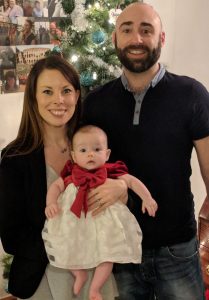
Also not on my close friend Holly’s bingo card was losing her husband, Andy, to cancer just four years after getting married. Holly and Andy have a beautiful daughter, April, who lost her dad. Life changed forever for both of them. Holly now wears many hats just to keep life moving, and I saw, and still see, the struggles that come with losing the person you expected to spend the rest of your life with.

It was Holly who first told me about the campaign she was involved in, fighting to change the support the Government offers to those who have lost a loved one. I had no idea that bereavement support had drastically changed just months before my own mum passed in 2017. Holly spent time educating me on the financial struggles people were facing, the reality that many cannot afford life insurance, and the fact that the Government had reduced long‑term support to just 18 months. I mean, who can rebuild their life in 18 months when everything has changed for an entire family?

I felt sadness. I felt anger. And I felt grief for the people experiencing this. It made me reflect on my own world, how different things could have been for my family had myself and my brother been younger. The more I learned, the more I understood why Holly and so many others were fighting.

What I saw in Holly, and in the people behind Widows Fight, was a group channelling their pain, their exhaustion, and their love into something bigger: a fight for change so that bereaved families are not left to struggle alone.

Widows Fight: Why the Campaign Exists

Widows Fight is a grassroots movement led by widows, widowers, and bereaved families who believe the current bereavement support system is unfair and inadequate. Their petition reached enough signatures for Parliament to consider a debate, which is a huge achievement for a community‑led campaign.

What support looks like now (post‑April 2017)

Bereavement Support Payment replaced all previous benefits. It provides:

For parents with children:

  • £3,500 lump sum
  • £350 per month for 18 months
  • Total: £9,800

For those without children:

  • £2,500 lump sum
  • £100 per month for 18 months
  • Total: £4,300

After 18 months, support stops completely.

What support looked like before April 2017

Families received:

Bereavement Payment:

  • £2,000 lump sum

Widowed Parent’s Allowance:

  • Around £108 to £115 per week

Paid until the youngest child finished full‑time education

  • Often 10 to 15 years of support, not 18 months.

Bereavement Allowance / Widow’s Pension:

  • Weekly payments
  • Continued until State Pension age
  • Available even without children

The old system recognised that grief and financial instability last years, not months.

Why Widows Fight matters

The campaign is fighting for:

  • Longer support
  • Fairer payments
  • Recognition of widows without children
  • Support that reflects the cost of living
  • A compassionate approach to bereavement

Their message is simple:

Bereavement is hard enough. Financial fear should not be added to it.

A Person‑Centred Perspective

As a counsellor, I sit with people in their grief. I see the confusion, the exhaustion, the fear, and the overwhelming responsibility that falls on one parent’s shoulders. Person‑centred counselling is built on empathy, unconditional positive regard, and meeting people exactly where they are. It recognises that grief is not linear, not predictable, and certainly not something that can be “sorted out” in 18 months.

Nearly eight years after losing my mum, I still have moments where the grief feels unexpectedly raw. That is the reality of loss. It ebbs and flows, and it does not fit into tidy timelines or Government frameworks. If grief can still catch me off guard after all this time, it is even clearer why expecting widows and single parents to rebuild their lives within 18 months is unrealistic and unfair.

Grief affects the ability to work, to parent, to think clearly, to make decisions, and to function. When financial pressure is added, it becomes a second trauma layered on top of the first.

Widows Fight is not just about money.

It is about dignity.

It is about giving families space to breathe.

It is about allowing grief to be processed without panic.

It is about compassion in policy.

My Pride in Holly, and a Call to Action

Recently, Holly shared her story publicly, speaking about Andy, April, and the reality of widowed parenting. In her interview, she said she hoped Andy would be proud of the work she is doing, and I know he would be. Like me, Holly has developed a dark sense of humour that helps her get through moments that can feel extremely dark and lonely. It is something many grieving people quietly lean on, a way of finding small pockets of relief in situations that feel impossibly heavy. Her courage is helping the campaign gain visibility, with local media sharing the experiences of widowed parents who are fighting for fairer support. Every interview, every shared story, and every moment of honesty helps build the momentum needed for change.

I have such an overwhelming amount of pride seeing the journey Holly has taken. Her strength, her love, and her true grit have helped get this campaign heard in Parliament. In an ideal world, we would not be fighting for this type of change, because we would much rather be sat next to our loved ones. But Holly and her comrades have taken their emotions and used them for the greater good, fighting for support that will not fix everything, but will take the edge off and give families a bit more stability during the hardest moments of their lives.

Widows Fight regularly share ways people can help on their social media platforms, including Facebook and Instagram. They have a fully drafted letter that supporters can send to their local MP, along with clear guidance on how to do it. Their pages also share the voices and experiences of widowed parents, helping to build understanding and momentum. The campaign is even in talks with a human rights lawyer, showing just how committed they are to exploring every possible avenue for change. Following their social media is one of the easiest ways to stay informed, get involved, and support the movement.

If you feel moved by Holly’s story, or by the thousands of families navigating grief and financial fear at the same time, you can help. Many supporters are writing letters to Parliament sharing their own experiences of loss, or simply expressing why they believe bereavement support should be fairer. If you would like to add your voice, you can contact Widows Fight directly for the address to send your letter to. They will guide you, support you, and welcome your contribution. Every story strengthens the call for change.

Grief is universal. Support should be too.

In my counselling room, I sit with people in their grief and meet them exactly where they are, and I stand with campaigns like Widows Fight in the hope that families can heal with compassion, stability, and without the added fear of financial hardship.

Take Care, Nicole x

Ethical Disclaimer
This blog reflects my personal views and experiences. It is separate from my work with clients, where I always meet each person exactly where they are, without expectation, judgement, or influence from my own story.


Categories
Christmas Grief Grief & Hope

The Weight Christmas Can Bring

When I think of Christmas prior to 2017, I immediately think of being back at home, so excited for the “Family Hamper” to arrive, and then waiting for everyone to be home so we could open it together and see what was inside.
I remember going to see The Muppets Christmas Carol with my dad and brother, hearing the Salvation Army Brass Band playing carols in the town centre, watching National Lampoon’s Christmas Vacation, and having the whole family round on Christmas Day.
I could honestly write a whole blog just on the warm and lovely memories I have of the build-up to Christmas and the day itself.

I also remember the harder times, when I felt pulled between going out with friends or spending time with family.

Life changed for us as a family in August 2017 when my mam passed away. Life as I knew it changed forever.
As time went on, I found myself surrounded by twinkling lights, Hallmark films, laughter, love, and happiness. My mam loved Christmas, so her absence was and still is greatly missed during this season (and always).

I believe that events that happen annually, like Christmas and birthdays, can bring a new wave of grief each year. Although we’re told that time is a healer, from my own personal experience, that’s not the case when it comes to losing someone you love.

The First Christmas Without Mam

If I could have gone to sleep or just skipped the first Christmas without Mam, I absolutely would have taken that option.
The pressure to put on a “brave face” was really felt, and I’m sure my family felt the same too.

We spent Christmas at my brother and sister-in-law’s house, a place where we’d shared many happy memories together.
After opening gifts, I took a moment to myself. While showering, I found myself talking out loud to my mam. I told her I was struggling and didn’t know how I was going to get through the rest of the day.
As I reached for the shampoo, I happened to glance at the name on the bottle. It read, “Bee Strong.”

I laughed when I saw it. I absolutely believe this was a message from my mam, offering comfort and support in any way she could.
Although the sadness and weight of loss didn’t disappear, I felt comforted knowing she was around us, not in person but in spirit. The day felt that bit easier, and I felt I’d been given permission to try and enjoy it.

Even though the day was a constant reminder that someone so important was missing from the family table, I felt comforted knowing Mam was still with me, just in a different way now. And somehow, that made things feel okay.

The Nature of Grief It Comes in Waves

I smiled when I came up with this title for this section. In my mind, I said, “Wave? More like tsunami.”

One thing I’ve learned from my own experience of loss is that grief isn’t a straight line. The stages of grief can give us an idea of what we might feel, but the reality is far messier. For me, it definitely wasn’t straightforward.

Imagine a shoreline with calm, gentle waves and the soothing sound of the sea. Then suddenly, a huge wave crashes in and takes you by surprise. That’s what grief feels like to me. It creeps up unexpectedly and can completely take you off guard.

Julia Samuel talks about this in her book This Too Shall Pass, describing how grief isn’t linear and can come in waves. I absolutely felt that on Christmas Day. One moment we were pulling crackers, and the next I was overwhelmed with sadness, missing my mam’s homemade stuffing balls.

That feeling didn’t magically disappear on Boxing Day. I still experience waves of grief now, even eight years later. Just like the sea, when the waves roll in, they bring things up from the seabed, feelings, memories, and moments that you might not have seen or felt for a long time.

The Stages of Grief

Elisabeth Kübler-Ross’s model, the Stages of Grief, describes what we might experience during loss. Although this blog focuses on the loss of a loved one, these stages can also apply to other types of loss such as a job, a friendship, a relationship, or even a sense of identity. Change itself can bring grief.

Denial: “This can’t be happening.”
A sense of disbelief or shock that helps buffer the initial pain.

Anger: “Why is this happening? It’s not fair.”
Anger can be directed at people, situations, or even the person who died. It’s a natural response to feeling powerless and hurt.

Bargaining: “If only I had done this…”
A stage filled with “what ifs” and “if onlys.” It’s a way of trying to regain control when everything feels uncertain.

Depression: Deep sadness and withdrawal.
The reality of the loss sets in, and emotions can feel heavy or overwhelming.

Acceptance: “This has happened, and I can find a way to live with it.”
Acceptance doesn’t mean being “over it.” It’s about acknowledging the loss and learning to live alongside it.

What I learned pretty quickly is that grief isn’t linear. Everyone’s experience is different, even if you’re grieving the same person or situation.

I skipped denial and spent months feeling angry at the world, myself, even my mam. How dare she leave me? Some days I found acceptance with a sprinkle of anger. Other days I felt nothing. Even now, I still move in and out of these stages, maybe not for as long, but it still happens.

This isn’t a race to get to the end of the stages. In my experience, that’s not how it works. It’s about learning to live again with the loss, giving it space, time, and respect.

I’m not sure I’ve fully accepted that Mam isn’t here anymore. Maybe that’s because I still feel her in other ways, in rainbows, in sunrises, in the smell of her perfume, or even in that shampoo bottle on Christmas Day.

When Christmas comes around, I’m reminded that grief doesn’t stick to dates or seasons. It sneaks up when you least expect it, in a song, a smell, or while you’re laughing with loved ones. That first Christmas without her felt like a wave I couldn’t outrun. Even now, there are moments that catch me off guard. Over time though, I’ve realised those waves are really just love showing up in a different way, little reminders that she’s still around, just not how she used to be.

Finding Meaning and Continuing Bonds

Noticing the message my mam was sending me on Christmas Day in 2017 was a turning point. It made me pause and reflect, to recognise my strength, my journey, and the amazing people around me who offered love and support. They helped me maintain that continued bond with my mam.

I truly believe she was showing me that she’s still present. She just can’t send messages or give hugs in the same way anymore. I just have to look a little harder to notice the love she’s still sending.

I also like to think she has a bit of FOMO, fear of missing out, so she has no choice but to stay present with us.

Seeing her message, “Bee Strong,” reminded me that our bond wasn’t broken. Her love for me is still here. She’s still on my team, and that presence is enough.

Time Isn’t a Healer

I’d love to tell you that time is a healer, but honestly, I don’t believe it is. Time gives us space to reflect, to learn, and to find new ways to cope, but it doesn’t take the pain away. There isn’t a magic moment when the grief fades. Sadly, no Dumbledore appears on the first anniversary to wave a wand and heal your heart.

What time does is allow us to adjust. To stop reaching for the phone to share something, though I still do that even now. To find a new rhythm. To start living again, even with the ache.

I’ve learned that life doesn’t stand still, and if we want to keep living, we have to find our own way to move forward. For me, that meant laughter, lots of it. I’ve developed a dark sense of humour, and it’s helped me more than I can say. Finding joy and humour, even in the darkness, has been a big part of my healing.

This ties in beautifully with Person Centred Counselling, acceptance, empathy, and finding ways to keep growing into the best version of ourselves, even through grief. Julia Samuel talks about this too, describing themes of compassion, acceptance, and growth through loss.

Closing Reflection

With the support of my partner, amazing family, and wonderful friends, I’ve learnt to find joy in Christmas again. I love the lights, the warmth, the carols, the cheesy films, and of course, the food and drink. To sound a little cheesy, and honestly, who doesn’t love cheese at Christmas, the true meaning of this season for me is family, friends, remembering those who can’t physically sit at the table, and continuing the traditions they created.

Christmas will always carry a little ache for me, and I’m learning that that’s okay. Grief can feel like love with nowhere to go, but I’ve found that love still finds a way to reach us. Maybe through a song, a smell, or even a shampoo bottle whispering, “Bee Strong.”

So that is how I want to sign off this blog, during a time of year that can feel difficult, strained, and triggering. Bee Strong, and Bee Kind to yourself.

Categories
Grief & Hope

Grief Without Closure: Living with Unresolved Loss and the Hope That Remains

Grief doesn’t always arrive with a clear ending. Sometimes, it lingers in the space between knowing and not knowing — in the silence, in the uncertainty.

Recently, I watched the documentary about Amy Bradley, who disappeared from a cruise ship in 1998. It was a heartbreaking and haunting story — not just because of the circumstances, but because of what it reveals about long-term grief, and how it lives alongside hope.

Amy’s family has spent over two decades living in that space. For them, time seemed to freeze in 1998, while the rest of the world continued on. Watching them speak reminded me how grief can suspend us — keep us tethered to a moment, while everything and everyone around us moves forward.
When I lost my mum, I remember feeling that same stillness. It was as though I had stopped, but the world hadn’t. Different circumstances, of course, but I can relate to that feeling of being out of step with time — of life continuing while your own heart feels paused.

Amy’s story has recently resurfaced through Netflix and social media. While that visibility might bring a renewed sense of possibility, I imagine it also reopens old wounds. The emotional toll of seeing hope rise again — only to possibly be met with silence — must be incredibly complex.

One moment that stayed with me was when Amy’s brother reflected on the impact of this grief on their family. It made me think about how the loss of a loved one — especially in uncertain circumstances — doesn’t just touch the past. It reaches into our futures. It shapes decisions. It influences how we move through the world.

Grief doesn’t always arrive after death. Sometimes, it comes when someone is missing. Or when we’re left with questions that don’t have answers. That, in itself, is its own kind of grief.

It’s not always visible. It doesn’t always follow a timeline. And often, it’s carried quietly — wrapped up in hope, confusion, love, and fear.

For those living with this kind of grief, I just want to say:
You are not alone. Your experience is valid. You don’t need to have clarity or closure to honour what you’re feeling.

As a person-centred counsellor, I deeply value the uniqueness of each individual’s grief journey. My understanding of grief comes not only from working alongside clients navigating loss but also from my own personal experience. This dual perspective informs my approach: creating a compassionate, non-judgemental space where you can explore your feelings at your own pace.

If you find yourself holding unanswered questions, or carrying grief that feels ambiguous or isolating, know that you don’t have to walk this path alone. When you feel ready, I welcome you to reach out and arrange a session — a safe space to be heard, supported, and understood exactly as you are.

I’m thankful you took the time to read and share this moment.

Nicole