Categories
Change, Anxiety Community Grief Person Centred Counselling

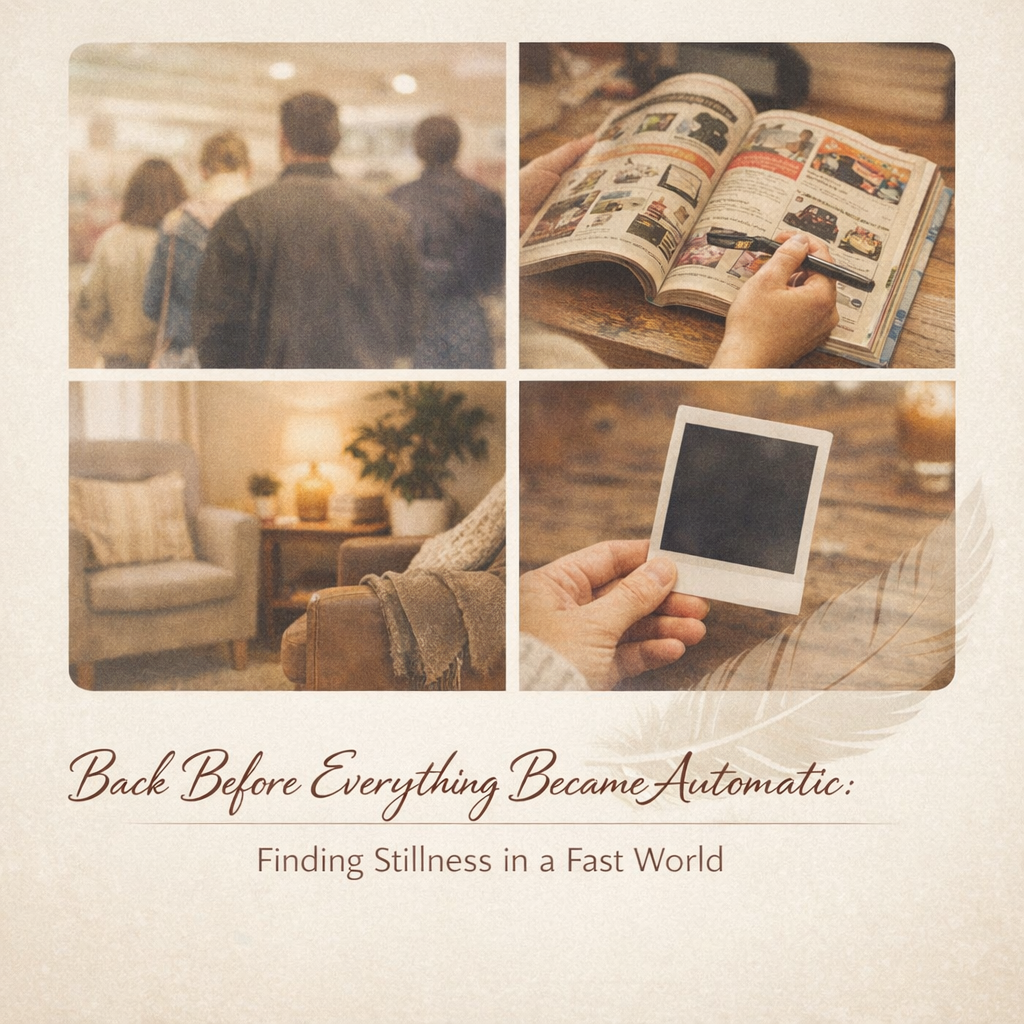
Back Before Everything Became Automatic: Finding Stillness in a Fast World

Something that has been playing on my mind for a while is how instant everything has become. If we want an answer, we Google it. If we need therapy, we can speak to an online counsellor within minutes. Some people even turn to TikTok therapists or ask ChatGPT for guidance. We’re surrounded by instant opinions, instant advice, instant solutions. And while these things can offer ideas or reassurance, they can’t replace the slower, deeper process of sitting with ourselves, noticing what we feel, and understanding what those feelings mean.

I’ve also been thinking about how the power of CBT comes in when we allow ourselves to sit with what we’re feeling. Not rushing to fix it, not searching for the quickest answer, but gently noticing our thoughts and emotions and what they’re trying to tell us. This actually aligns so closely with the work I do as a person‑centred counsellor creating space to explore, rather than pushing for a solution. I’ll be honest, I’ve found this difficult at times in my own life. There have been moments where I’ve wanted the answer immediately or wanted something to take the discomfort away. But sitting with myself, even when it’s uncomfortable, has taught me so much more than any instant answer ever could.

And although I miss the waiting and the anticipation, I also find it hard to sit with it at times. Just because something is difficult doesn’t mean it isn’t wise or healthy. Sometimes we need to sit within the unknown to feel what it’s like not to have the answer yet, not to know what comes next, and to let things unfold organically. It’s uncomfortable, and I’m not immune to that discomfort. But I’m learning that the unknown has its own lessons, its own pace, and its own quiet wisdom.

I’ve had a lot of time to reflect lately, and while driving the other day Automatic by Miranda Lambert came on. It really made me miss having to wait being patient having the time to decide whether the thing I absolutely must have is actually something I need in my life.

Person‑centred counselling invites us to be in the moment, to get to know ourselves as we are right now. That song made me reflect on my past and how much I miss some of the simplicities of being a young adult. How would it feel to go back to those times? To not have same‑day delivery? To flick through the Argos catalogue, circle the thing we wanted, write the code on the little slip, and wait our turn to see if it was in stock. I miss that small ritual. I wonder if I’m on my own in that, or whether you feel something similar.

Life felt slower when things weren’t instantaneous. There was more community. Now so much of our communication happens through email, Zoom, or text. I’m not saying one way is better than the other having things at our fingertips can be incredibly useful but I’m noticing the difference.

In the counselling room I encourage clients to slow down and reflect on their thoughts and feelings in the moment. Slowing down during anxiety or difficult times can help us understand what’s really going on for us. Taking things gently and gradually can bring longer‑term comfort. It reminds me of waiting in line at Argos as a child for a toy I’d saved up for, only to hear it was out of stock and I’d have to wait for the next delivery. Patience is something I’ve learned to appreciate sometimes through gritted teeth and a strained smile and I often see similar emotions and explorations in the counselling room. It’s a space I feel extremely privileged to be in.

All of this reflection brought me back to grief. Grief isn’t always about losing a person. It can be about anything we miss or struggle to accept has changed. I truly miss parts of my world I no longer have access to, or ways of living that have simply moved on. I miss writing letters and waiting for a response. I miss the landline ringing and everyone wondering who it might be for. The magic of waiting and wondering seems to have faded, replaced by the magic of how quickly things arrive.

What I keep coming back to is the pace of the counselling room, the slowing, the softening, the moment a client relaxes into the chair. The beauty of patience, wonder, and quiet magic when someone begins to see their hard work supporting them outside the room.

There’s something about Automatic that stayed with me long after the song finished. Not the words themselves, but the feeling that gentle reminder of a time when life unfolded at a slower pace, when waiting was part of the rhythm rather than something to avoid. It nudged me to notice what I miss, what I value, and what I want to carry forward.

Person‑centred counselling offers that same kind of slowing.
A space where nothing has to be instant.
A space where you can arrive exactly as you are.
A space where your pace is the right pace.

I see the magic of that when I work with clients the way someone softens into the chair, the way their breathing steadies, the way understanding grows slowly, quietly, in its own time. It’s a privilege to witness that kind of patience and courage.

So as the world continues to speed up, I’m choosing to honour the moments that ask to be taken gently. To wait in the queue. To print the photos. To sit with myself. To welcome the parts of life that aren’t automatic at all.

And perhaps, as you read this, you might take a moment to notice what you miss what you long for, what you’d like to reclaim, or where you might welcome a little slowness back into your own life.

Sometimes the most meaningful changes grow in the waiting.

And if you have a love for music, are curious about what inspired this reflection, or simply enjoy discovering new songs, I encourage you to give Automatic a listen. It might stir something in you too.

Take Care, Nicole x
Categories
Community Mental Health Person Centred Counselling

In a World Where You Can Be Anything: Kindness in and Beyond the Counselling Room

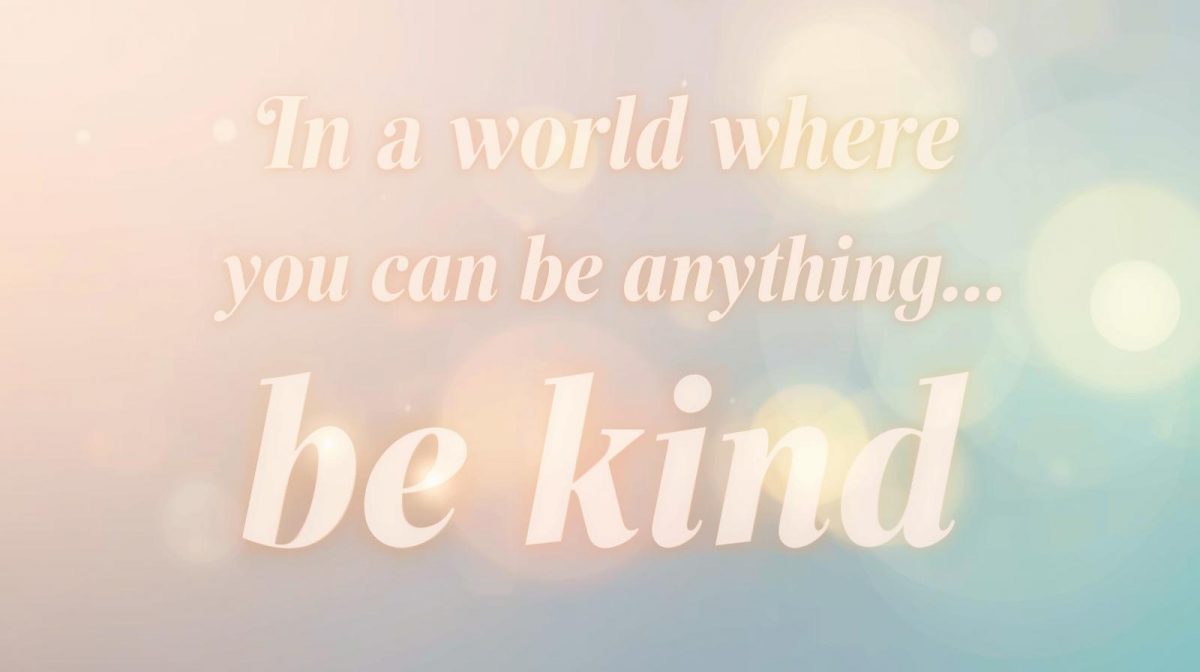
I watched the new Caroline Flack documentary recently, and ironically, as I write this blog, it is also World Kindness Day. One of the messages she left behind , one that continues to echo for many people, is the reminder: “In a world where you can be anything… be kind.”

As a human being and a person-centred counsellor, kindness and empathy are central to the way I try to move through the world. I offer these values to others, and  myself too. Yet we live in a world where kindness isn’t always freely given, whether in person or online. We rarely know what is happening for someone else. On the surface they may beam with a beautiful smile, yet beneath it something entirely different may be unfolding.

Some of us now live our lives through the lens of a camera, especially when our work depends on visibility. That visibility brings connection, creativity, and opportunity, but also vulnerability. It leaves people open to judgement, assumptions, and sometimes even threats. It can feel claustrophobic. And as easy as it is to be pulled into sharing an opinion, it’s equally easy to slip into doom scrolling, absorbing what people appear to think about “you.” But are they seeing you at all? Or just a single, curated sliver?

This is the opposite of what happens in the counselling room. There, you are welcomed exactly as you are. No judgement. No expectations. No conditions. Within the person-centred approach, unconditional positive regard, empathy, and congruence shape the relationship. For an hour, clients can be themselves: honest, vulnerable, free from the pressure to perform. They are met with understanding, not assumptions.

As opinions travel faster than compassion, days like World Kindness Day ask us to pause and truly see another person.

Behind the Screen

We’ve all scrolled through social media and thought:
“They look so happy… I wish my life was like that,” or
“Their job must be amazing; everything seems so easy.”

I’ve had those thoughts too.

But I often wonder what life feels like once the camera is off. What remains when the door closes, the makeup is removed, and the smiling public persona fades? Because mental health exists there too,behind the filters, behind the edited clips, behind the headlines.

Public figures carry the weight of being watched and commented on by strangers. The pressure to perform or appear “OK” must be exhausting. Scrutiny from trolls, fans, and media stories built from fragments creates a world where privacy can feel shaky, and safety uncertain. A curated smile doesn’t protect against loneliness, anxiety, or vulnerability. Those parts rarely make it into the final cut.

Fragmented Stories: What We Don’t See

Social media gives us connection, but it also gives people permission to judge quickly and loudly. Recently, I’ve noticed how easily we slip into becoming online detectives or critics, even when we know almost nothing about the person behind the post.

I often use the analogy that our story is like a jigsaw puzzle: it takes many pieces to show the full picture. And when pieces are missing, the image can’t be fully understood.

Online, we see only the pieces people choose to show often not the most important ones. The media may see only 10 pieces of a 100-piece puzzle, yet from those few fragments, entire narratives are created. The gaps get filled with assumptions or speculation, sometimes even fiction. This creates conflict, misunderstanding, and unnecessary hurt.

And I often wonder whether the people crafting these narratives truly pause to consider their human impact.

Parallels with the Counselling Room

Here, the contrast to counselling becomes even clearer. In therapy, instead of judging based on fragments, we explore the full picture gently, at the client’s pace.

Person-centred counselling offers:

  • Unconditional Positive Regard: acceptance without performance

  • Empathy: entering someone’s inner world without presumption

  • Congruence: a genuine, honest presence

Clients don’t have to curate a version of themselves that makes sense to others. They can show the hidden pieces of their puzzle, even the ones they’ve avoided. The messy pieces. The painful ones. The uncertain ones.

In a world that judges instantly, the counselling room becomes a rare space where someone is truly seen.

What Does Kindness Mean to You?

I often return to this question: What does kindness mean to you?

To me, kindness is not a hashtag or a performance. It isn’t dependent on whether someone “deserves” it. It’s a way of living  a practice.

Kindness means offering gentleness even when it isn’t returned. It means remembering that I have no idea what someone else is carrying beneath the surface. And if I can offer compassion, I hope it might make even a small difference to their day.

As I’ve grown older, I’ve realised kindness looks like:

  • thinking before I speak

  • listening without judgement

  • understanding that we are all different

  • accepting that I will not always get it right

But I try — and I try unconditionally.

A Final Reflection

Writing this has been harder than I expected. There is much more I could say, but I want to speak with care, knowing this topic touches real lives and real pain.

We cannot know every story behind every smile, post, or headline.

But we can choose how we meet those stories, with empathy, patience, and kindness.

And perhaps this is where the counselling room serves as a guide. The way we hold space for clients, gently, without assumptions, without needing the full picture before we offer acceptance, is something we can carry into the world around us.

In a world where you can be anything, let us be kind 
to ourselves, and to others, especially when we cannot see their whole story.

Take care, Nicole


Categories
Community Person Centred Counselling

Be Your Own Pace Car: Finding Community at Caffeine & Machine

If I said the word community… what would it mean to you? For me, it can mean anything—a friendship circle, a hobby group, or even a mental health support network. But what about a community of strangers united by a love for cars, automotive culture, and conversation?

My partner recently introduced me to Caffeine & Machine, and what I discovered there warmed my heart—not just as someone observing car culture, but as the founder of As Light As A Feather Counselling, based in Huddersfield, West Yorkshire, noticing the power of human connection.

A Place for Everyone

I’ll admit upfront: I know very little about cars. To my partner and his dad’s amusement, my expertise goes as far as, “Oh, that colour would make a fantastic nail polish.” But I do understand people, and I recognise what makes a community thrive.

Caffeine & Machine is more than a car community in the UK. It’s a welcoming space for people who sometimes find it hard to connect, as well as for those who simply love cars. Conversations often start with cars, but they frequently grow into something deeper—friendships are formed, bonds strengthened, and emotional burdens shared and halved.

This mirrors what I strive for in my work at As Light As A Feather Counselling: creating spaces where people feel safe, accepted, and heard, allowing them to express themselves without judgement.

The Roots of Caffeine & Machine

Founded by Phil McGovern and Dan Macken in 2015, Caffeine & Machine started with a simple vision: to bring car enthusiasts together in a way that breaks down barriers and celebrates inclusion.

The Hill in Warwickshire opened in 2018 and has since become an iconic location for automotive culture. Surrounded by greenery, it’s a place to wander, relax, and recharge. Whether you want to soak up the sun or retreat to the fab on-site teepee, it’s designed for comfort and connection.

Since then, Caffeine & Machine has expanded with two further venues: The Bowl and The Hut, each carrying the same ethos of community, connection, and shared passion for cars and machinery.

I Love You, Man: A Safe Space for Men

Phil noticed that mental health, especially in men, was becoming a growing concern. In response, he created I Love You, Man, a monthly event offering a safe, unrecorded space where men can share openly, listen, and simply exist without judgement.

While I haven’t personally attended, it’s easy to imagine that attendees leave feeling lighter, understood, and supported—mirroring the trust and acceptance I cultivate in my counselling work. This event embodies many person-centred counselling principles: empathy, unconditional positive regard, and the creation of a safe, non-judgemental space. People can speak, or just listen—they can be vulnerable without fear.

Feels Like Home

After visiting The Hill a couple of times, as we drove away, we both said it “feels like home”—not knowing that it’s actually one of Caffeine & Machine’s slogans. The feeling was undeniable: hundreds of people come each day and leave feeling safe, seen, and connected.

In counselling terms, this is exactly the type of therapeutic home I aim to create at As Light As A Feather Counselling—a safe space where trust is established, and people can be themselves, free of masks or pretences.

Community and Counselling: A Shared Philosophy

Community is at the heart of both Caffeine & Machine and counselling. Like a counselling room, the venues foster trust, safety, and presence. Their mission says it best:

“…a place to enjoy wonderful food and drink, soak up an ever-eclectic display of brilliant machinery, and above all else, come be around friends…”
“We seek to break down barriers, encourage conversation and discovery.”

Being part of this community is therapeutic in itself: sharing, listening, and connecting all contribute to mental health and emotional well-being. It demonstrates how supportive spaces in everyday life—even outside a counselling room—can nurture mental health support.

More Than Just Cars

While my partner admired the eclectic mix of old and new vehicles, I noticed the human side: strangers connecting, stories shared, laughter, and new friendships forming. People who might normally struggle to engage with others found themselves part of something bigger.

And of course, the food and drink are amazing: homemade pizzas, loaded fries, poke bowls, and the weekend BBQ tray (chef’s kiss), all washed down with the famous Hawkstone lager. Community nourishes both body and mind.

Be Your Own Pace Car

Caffeine & Machine proudly declare, “We Are The Pace Car.” They set the tempo for culture, community, and conversations around the things we love that move.

But that message is also for us personally. To me, it means: be your own pace car. Set your rhythm, follow your flow, and lead your journey. Slow down when you need to, regroup, and move forward again. That’s what feels like home—and it’s the same philosophy I bring to every session at As Light As A Feather Counselling.

Support and Links

If reading this resonates and you feel you could benefit from counselling, I’m here to support you at As Light As A Feather Counselling. Whether you’re navigating mental health challenges, feeling isolated, or simply need someone to listen, you can reach out via the links on my website. Safe, confidential, and supportive spaces exist to help you be heard, understood, and valued.

For more about the Caffeine & Machine community and events: Caffeine & Machine
Learn more about the origins of their mental health initiative: I Love You, Man – An Origin Story
Additional men’s mental health support can be found at: Andy’s Man Club

Take Care, Nicole