
Categories
Change, Anxiety Grief Grief & Hope Widows Fight

I Stand With Widows Fight: Grief, Friendship, and the Call for Change

I never thought that when I was sat in my bedroom as a child that my path would lead me to becoming a person‑centred counsellor specialising in grief and loss. Back then, I imagined myself as a pop star or performing on the West End. Life has a way of surprising us, sometimes gently, sometimes painfully.

I certainly didn’t have on my bingo card losing my mum at 30. I was already on the road to becoming a counsellor when she was diagnosed with ovarian cancer, but her illness changed everything. It shaped the direction I went in and helped me discover the work I was meant to do.

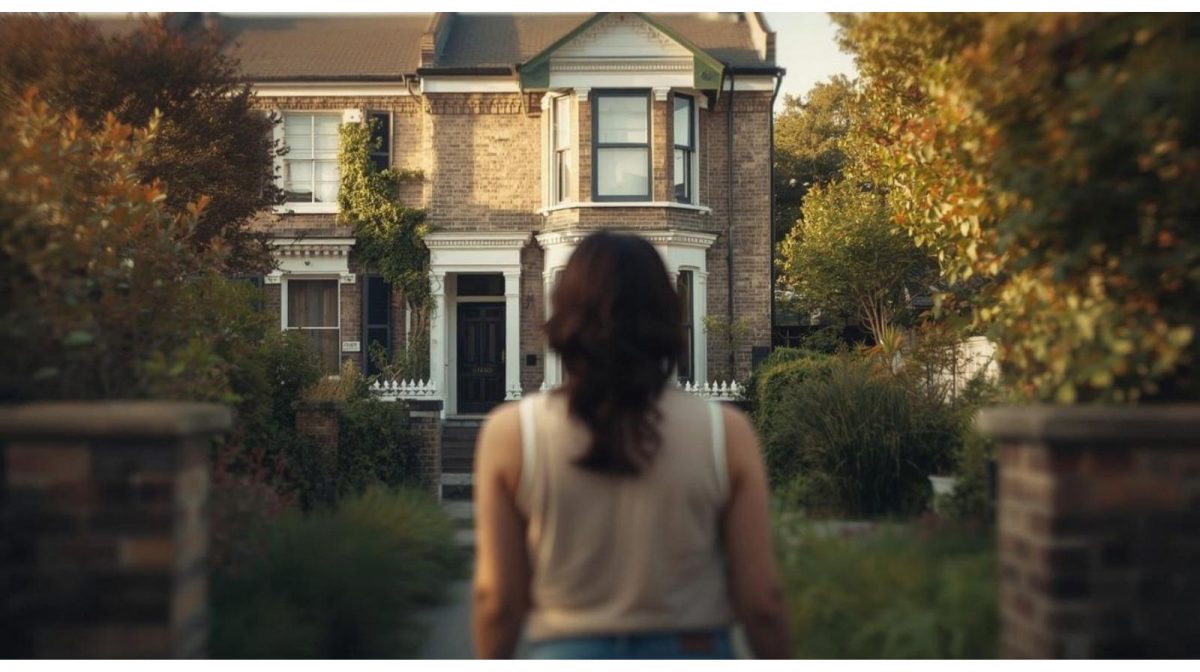
Also not on my close friend Holly’s bingo card was losing her husband, Andy, to cancer just four years after getting married. Holly and Andy have a beautiful daughter, April, who lost her dad. Life changed forever for both of them. Holly now wears many hats just to keep life moving, and I saw, and still see, the struggles that come with losing the person you expected to spend the rest of your life with.

It was Holly who first told me about the campaign she was involved in, fighting to change the support the Government offers to those who have lost a loved one. I had no idea that bereavement support had drastically changed just months before my own mum passed in 2017. Holly spent time educating me on the financial struggles people were facing, the reality that many cannot afford life insurance, and the fact that the Government had reduced long‑term support to just 18 months. I mean, who can rebuild their life in 18 months when everything has changed for an entire family?

I felt sadness. I felt anger. And I felt grief for the people experiencing this. It made me reflect on my own world, how different things could have been for my family had myself and my brother been younger. The more I learned, the more I understood why Holly and so many others were fighting.

What I saw in Holly, and in the people behind Widows Fight, was a group channelling their pain, their exhaustion, and their love into something bigger: a fight for change so that bereaved families are not left to struggle alone.

Widows Fight: Why the Campaign Exists

Widows Fight is a grassroots movement led by widows, widowers, and bereaved families who believe the current bereavement support system is unfair and inadequate. Their petition reached enough signatures for Parliament to consider a debate, which is a huge achievement for a community‑led campaign.

What support looks like now (post‑April 2017)

Bereavement Support Payment replaced all previous benefits. It provides:

For parents with children:

  • £3,500 lump sum
  • £350 per month for 18 months
  • Total: £9,800

For those without children:

  • £2,500 lump sum
  • £100 per month for 18 months
  • Total: £4,300

After 18 months, support stops completely.

What support looked like before April 2017

Families received:

Bereavement Payment:

  • £2,000 lump sum

Widowed Parent’s Allowance:

  • Around £108 to £115 per week

Paid until the youngest child finished full‑time education

  • Often 10 to 15 years of support, not 18 months.

Bereavement Allowance / Widow’s Pension:

  • Weekly payments
  • Continued until State Pension age
  • Available even without children

The old system recognised that grief and financial instability last years, not months.

Why Widows Fight matters

The campaign is fighting for:

  • Longer support
  • Fairer payments
  • Recognition of widows without children
  • Support that reflects the cost of living
  • A compassionate approach to bereavement

Their message is simple:

Bereavement is hard enough. Financial fear should not be added to it.

A Person‑Centred Perspective

As a counsellor, I sit with people in their grief. I see the confusion, the exhaustion, the fear, and the overwhelming responsibility that falls on one parent’s shoulders. Person‑centred counselling is built on empathy, unconditional positive regard, and meeting people exactly where they are. It recognises that grief is not linear, not predictable, and certainly not something that can be “sorted out” in 18 months.

Nearly eight years after losing my mum, I still have moments where the grief feels unexpectedly raw. That is the reality of loss. It ebbs and flows, and it does not fit into tidy timelines or Government frameworks. If grief can still catch me off guard after all this time, it is even clearer why expecting widows and single parents to rebuild their lives within 18 months is unrealistic and unfair.

Grief affects the ability to work, to parent, to think clearly, to make decisions, and to function. When financial pressure is added, it becomes a second trauma layered on top of the first.

Widows Fight is not just about money.

It is about dignity.

It is about giving families space to breathe.

It is about allowing grief to be processed without panic.

It is about compassion in policy.

My Pride in Holly, and a Call to Action

Recently, Holly shared her story publicly, speaking about Andy, April, and the reality of widowed parenting. In her interview, she said she hoped Andy would be proud of the work she is doing, and I know he would be. Like me, Holly has developed a dark sense of humour that helps her get through moments that can feel extremely dark and lonely. It is something many grieving people quietly lean on, a way of finding small pockets of relief in situations that feel impossibly heavy. Her courage is helping the campaign gain visibility, with local media sharing the experiences of widowed parents who are fighting for fairer support. Every interview, every shared story, and every moment of honesty helps build the momentum needed for change.

I have such an overwhelming amount of pride seeing the journey Holly has taken. Her strength, her love, and her true grit have helped get this campaign heard in Parliament. In an ideal world, we would not be fighting for this type of change, because we would much rather be sat next to our loved ones. But Holly and her comrades have taken their emotions and used them for the greater good, fighting for support that will not fix everything, but will take the edge off and give families a bit more stability during the hardest moments of their lives.

Widows Fight regularly share ways people can help on their social media platforms, including Facebook and Instagram. They have a fully drafted letter that supporters can send to their local MP, along with clear guidance on how to do it. Their pages also share the voices and experiences of widowed parents, helping to build understanding and momentum. The campaign is even in talks with a human rights lawyer, showing just how committed they are to exploring every possible avenue for change. Following their social media is one of the easiest ways to stay informed, get involved, and support the movement.

If you feel moved by Holly’s story, or by the thousands of families navigating grief and financial fear at the same time, you can help. Many supporters are writing letters to Parliament sharing their own experiences of loss, or simply expressing why they believe bereavement support should be fairer. If you would like to add your voice, you can contact Widows Fight directly for the address to send your letter to. They will guide you, support you, and welcome your contribution. Every story strengthens the call for change.

Grief is universal. Support should be too.

In my counselling room, I sit with people in their grief and meet them exactly where they are, and I stand with campaigns like Widows Fight in the hope that families can heal with compassion, stability, and without the added fear of financial hardship.

Take Care, Nicole x

Ethical Disclaimer
This blog reflects my personal views and experiences. It is separate from my work with clients, where I always meet each person exactly where they are, without expectation, judgement, or influence from my own story.
 

Categories
Change, Anxiety Community Grief Person Centred Counselling

Back Before Everything Became Automatic: Finding Stillness in a Fast World

Something that has been playing on my mind for a while is how instant everything has become. If we want an answer, we Google it. If we need therapy, we can speak to an online counsellor within minutes. Some people even turn to TikTok therapists or ask ChatGPT for guidance. We’re surrounded by instant opinions, instant advice, instant solutions. And while these things can offer ideas or reassurance, they can’t replace the slower, deeper process of sitting with ourselves, noticing what we feel, and understanding what those feelings mean.

I’ve also been thinking about how the power of CBT comes in when we allow ourselves to sit with what we’re feeling. Not rushing to fix it, not searching for the quickest answer, but gently noticing our thoughts and emotions and what they’re trying to tell us. This actually aligns so closely with the work I do as a person‑centred counsellor creating space to explore, rather than pushing for a solution. I’ll be honest, I’ve found this difficult at times in my own life. There have been moments where I’ve wanted the answer immediately or wanted something to take the discomfort away. But sitting with myself, even when it’s uncomfortable, has taught me so much more than any instant answer ever could.

And although I miss the waiting and the anticipation, I also find it hard to sit with it at times. Just because something is difficult doesn’t mean it isn’t wise or healthy. Sometimes we need to sit within the unknown to feel what it’s like not to have the answer yet, not to know what comes next, and to let things unfold organically. It’s uncomfortable, and I’m not immune to that discomfort. But I’m learning that the unknown has its own lessons, its own pace, and its own quiet wisdom.

I’ve had a lot of time to reflect lately, and while driving the other day Automatic by Miranda Lambert came on. It really made me miss having to wait being patient having the time to decide whether the thing I absolutely must have is actually something I need in my life.

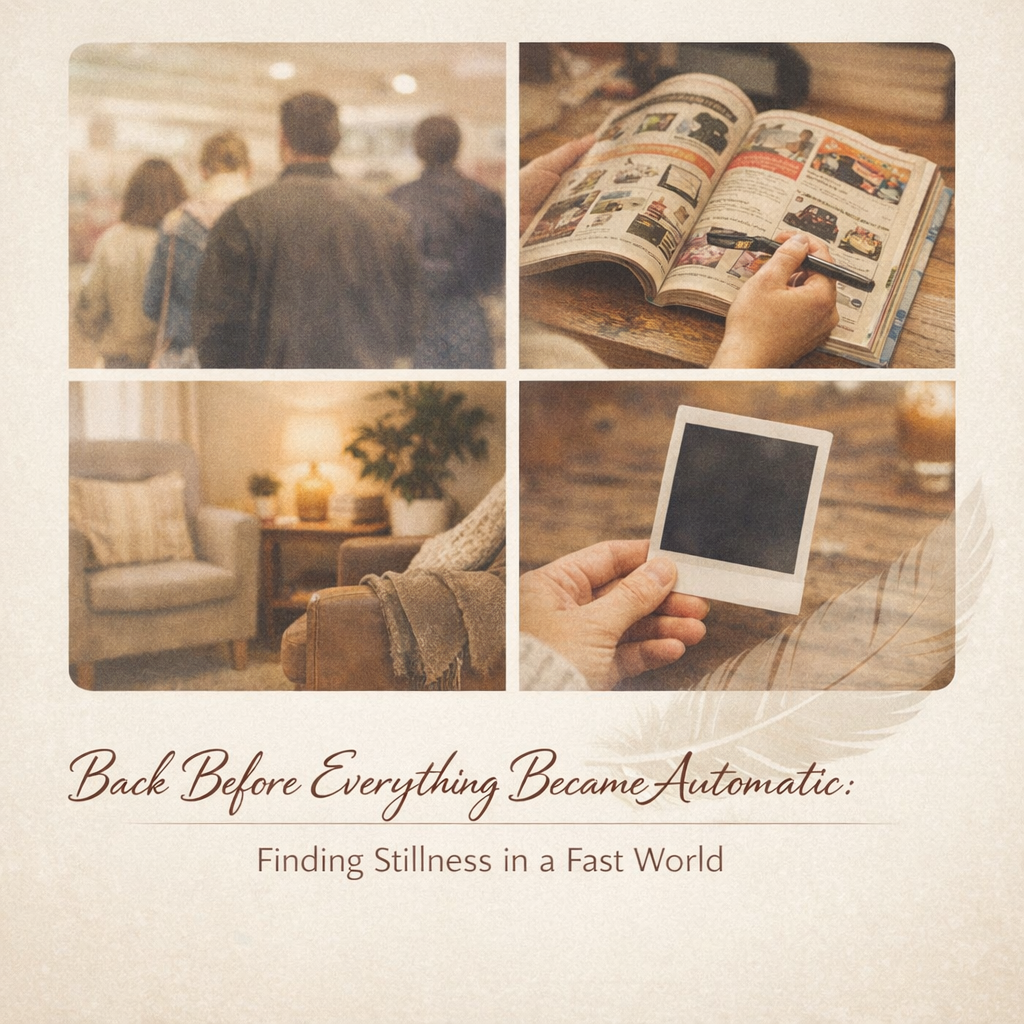
Person‑centred counselling invites us to be in the moment, to get to know ourselves as we are right now. That song made me reflect on my past and how much I miss some of the simplicities of being a young adult. How would it feel to go back to those times? To not have same‑day delivery? To flick through the Argos catalogue, circle the thing we wanted, write the code on the little slip, and wait our turn to see if it was in stock. I miss that small ritual. I wonder if I’m on my own in that, or whether you feel something similar.

Life felt slower when things weren’t instantaneous. There was more community. Now so much of our communication happens through email, Zoom, or text. I’m not saying one way is better than the other having things at our fingertips can be incredibly useful but I’m noticing the difference.

In the counselling room I encourage clients to slow down and reflect on their thoughts and feelings in the moment. Slowing down during anxiety or difficult times can help us understand what’s really going on for us. Taking things gently and gradually can bring longer‑term comfort. It reminds me of waiting in line at Argos as a child for a toy I’d saved up for, only to hear it was out of stock and I’d have to wait for the next delivery. Patience is something I’ve learned to appreciate sometimes through gritted teeth and a strained smile and I often see similar emotions and explorations in the counselling room. It’s a space I feel extremely privileged to be in.

All of this reflection brought me back to grief. Grief isn’t always about losing a person. It can be about anything we miss or struggle to accept has changed. I truly miss parts of my world I no longer have access to, or ways of living that have simply moved on. I miss writing letters and waiting for a response. I miss the landline ringing and everyone wondering who it might be for. The magic of waiting and wondering seems to have faded, replaced by the magic of how quickly things arrive.

What I keep coming back to is the pace of the counselling room, the slowing, the softening, the moment a client relaxes into the chair. The beauty of patience, wonder, and quiet magic when someone begins to see their hard work supporting them outside the room.

There’s something about Automatic that stayed with me long after the song finished. Not the words themselves, but the feeling that gentle reminder of a time when life unfolded at a slower pace, when waiting was part of the rhythm rather than something to avoid. It nudged me to notice what I miss, what I value, and what I want to carry forward.

Person‑centred counselling offers that same kind of slowing.
A space where nothing has to be instant.
A space where you can arrive exactly as you are.
A space where your pace is the right pace.

I see the magic of that when I work with clients the way someone softens into the chair, the way their breathing steadies, the way understanding grows slowly, quietly, in its own time. It’s a privilege to witness that kind of patience and courage.

So as the world continues to speed up, I’m choosing to honour the moments that ask to be taken gently. To wait in the queue. To print the photos. To sit with myself. To welcome the parts of life that aren’t automatic at all.

And perhaps, as you read this, you might take a moment to notice what you miss what you long for, what you’d like to reclaim, or where you might welcome a little slowness back into your own life.

Sometimes the most meaningful changes grow in the waiting.

And if you have a love for music, are curious about what inspired this reflection, or simply enjoy discovering new songs, I encourage you to give Automatic a listen. It might stir something in you too.

Take Care, Nicole x

Categories
Change, Anxiety change, seasons, self reflections sky Travel

Finding the Beauty in the Moment: Glimmers on the Morning Drive

Change seems to have been on the menu for me of late. On the same day, I left a company I had been with for 20 years and completed the sale of my home that I had lived in for 17 years. The week after, I began a new role in a new town, in a new county. I was now a ‘commuter’, travelling 40 minutes each way to and from my new role. A whole new adventure was upon me.

In this blog, I’ll talk more about my journey to work, what ‘glimmers’ are and what they mean to me, and my discovery of the Swedish term Hemmablind — meaning ‘home blind’ — when we stop noticing what is familiar or beautiful around us.

What Are Glimmers?

During my first week in my new role, I was asked to attend an event with a motivational speaker called Gavin Oattes. I am not usually a fan of these kinds of events — the thought of being sat with people I don’t know and having to engage in ‘forced fun’ is my idea of torture — however, this was different.

Gavin spoke about glimmers, and I was immediately drawn in. He described glimmers as noticing moments of beauty that we may once have overlooked or ignored — beauty that is quite literally on our doorsteps. His focus on being present and in the moment really resonated with me, and it made me reflect on how easy it is to forget to be present. This is something Carl Rogers, the founder of Person-Centred Counselling, wrote about regularly.

Not long after, I was introduced to the Swedish term Hemmablind, and I was really taken by it. It felt closely linked to what Gavin had described — and to the importance of noticing beauty in parts of our day that can feel monotonous, such as a commute to work.

Glimmers matter. They support our wellbeing, allow us to be in the moment, bring a sense of calm, and can become a form of self-care. Glimmers help us ‘wake up’ to moments we may have stopped noticing as the daily grind takes over. They remove the blinkers — or, as I’ve discovered, they help us move away from Hemmablind — something I’ve experienced first-hand on my commute to this new adventure.

From a therapeutic perspective, glimmers also link closely with Polyvagal Theory, which suggests that our nervous system is constantly scanning for cues of safety or threat. When we notice moments of beauty, calm, or connection — such as a peaceful sunrise or stillness on the road — we send signals of safety to our nervous system. This can help us move out of a state of stress or anxiety and into one of calm and regulation.

Within Person-Centred Counselling, there is a strong emphasis on awareness, presence, and trusting our own experience. Glimmers invite us to slow down, notice what is happening internally and externally, and gently acknowledge what feels nourishing or meaningful in that moment — without judgement or pressure to change anything.

The Commute – An Unexpected Space for Reflection

When I think of the word commute, I think of London — the stress, shouting, beeping horns — and by the time you reach work, you’re already at the top of your stress levels. Many people see commuting as a waste of time. However, my experience has been the complete opposite.

My new role has surprisingly offered me an opportunity to slow down mentally. I noticed my first glimmer early on in this new adventure. I began to see the beauty of my commute: amazing scenery, not many cars on the road, and not a motorway in sight. Daily, my jaw drops when I reach a certain point of my journey and get to witness glorious sunrises — all the warm, beautiful colours filling the sky.

I realised I had become Hemmablind. My blinkers had slowly built up over time, and now they had come away. For the first time in a while, I was witnessing a glimmer — and I was determined to keep it going. In therapy, this can also be known as mindfulness: being present in the moment with intention.

The Beauty of the Rising Sun

I am the first to admit that I don’t know the science behind the sky, but what I can appreciate is the beauty it provides — and the fact that it is free and available to all who wish to notice it.

Sunrises and sunsets stop me in my tracks. The colours — oranges, purples, reds — all mingled together. I love the silhouettes of the trees; they remind me of a candle holder that comes alive when you add a candle to it. Even with music playing, I feel still and at peace when I witness the beauty the sky creates for me on my journey.

The sky creates this beauty whether we take note or not. What I do in these moments is make a conscious choice to be present and give my full attention to the beauty right in front of me (and, of course, the road!).

In Person-Centred Counselling, Carl Rogers spoke about the importance of valuing our subjective experience — trusting what we notice, feel, and experience in the moment. As I watch the sunrise, I’m not analysing it or trying to make meaning; I’m simply allowing myself to experience it fully. In doing so, I’m honouring my own internal world and responding to what feels calming, grounding, and right for me.

Why Noticing Beauty Helps Us Be Present

Mindful noticing and being present in the moment can reduce anxiety, increase grounding, and create small pockets of joy. Being present and noticing the sunrise on my way to work has created a positive outlook for my day. It sets my day off well and brings me a deep sense of calm.

In those moments, my heart feels full. I feel present, anxiety-free, and grateful.

The Person-Centred Approach encourages presence, self-awareness, and acceptance. Allowing ourselves to notice what is around us supports psychological wellbeing. It’s important to remember that being present doesn’t require deep meditation — it can be as simple as noticing a glimmer of beauty, light, colour, nature, or stillness.

There is beauty in the ordinary, if we allow ourselves to notice it.

Free Moments of Beauty Are All Around Us

Mindful moments of beauty cost nothing. These moments are all around us — and yet, at times, we become Hemmablind. Making the conscious choice to remember the free beauty around us is a gift.

The free gifts of glimmers around us can include:

  • Sunrises

  • Birdsong

  • Weather changes

  • People smiling

  • Light patterns

  • Music

  • Laughter

Hemmablind reminds us that we sometimes overlook these moments not because they aren’t meaningful, but because they are familiar. Noticing what is around us and allowing ourselves to enjoy these moments can support wellbeing and resilience. By shifting our attention towards moments of calm and beauty, we gently signal safety to our nervous system and build our capacity to cope with life’s challenges.

How You Can Try This Practice

Why not try to find your own glimmer? You might choose one part of your day — perhaps your commute, a dog walk, or even making a cup of tea. Look for one small moment of beauty each day. Pause just long enough to acknowledge it and notice how it makes you feel.

You might find it helpful to keep a ‘glimmer list’ or a photo gallery on your phone named Glimmers. Whatever works for you.

In Person-Centred Counselling, there is no right or wrong. Find something that feels right for you and allow yourself the space to explore it.

Closing Reflection

Glimmers have completely changed my commute and, in turn, my day as a whole. I feel more positive, less anxious, and more present. I now enjoy and truly take in the beauty around me.

I encourage you to reflect and experiment with noticing what you may have become Hemmablind to — and whether you can gently remove some of the blinkers that have built up over time, which may have been hiding moments of beauty.

Glimmers are all around us. I encourage you to look for your own moments of beauty — free for us all to enjoy and embrace.

“Sometimes the smallest things take up the most room in our hearts.” — A.A. Milne

Take care,
Nicole

Categories
Anxiety Change, Anxiety Grief Moving Home

New Beginnings and Safe Spaces: The Anxiety of Change and How Person-Centred Counselling Helps

When I bought my home in 2008, I imagined I’d be here forever. And yet, at times, I absolutely hated living here. It brought on all sorts of anxieties and worries the kind that seem to come with adulthood.

Even as a counsellor, I’ve sat with anxiety , and I think that’s part of what makes my work honest. It’s through those personal experiences that I can truly sit alongside clients as they explore their own.

My home holds so many stories. It’s now the only physical place my family has left where my mam spent time  since my dad moved out of the home they shared, and my brother and sister-in-law have moved on from theirs too. It’s been the backdrop to laughter, tears, career changes, heartbreaks, new connections, and long hours sat on the step on my landing — my thinking space.

Over the years, I grew up in this home. I changed. I retrained as a counsellor, built deeper relationships, and started showing up more fully as myself. For a long time, I just called it a house I hadn’t formed a relationship with it. Slowly, though, I began to shape it into something of my own. It became more than a roof over my head. It became a safe space. A place where I could enjoy my own company and come home to myself.

Change Brings Up Feelings — And That’s Okay

So, why am I writing this now? Because I’m about to leave this home. It’s time for a new beginning — and with that comes excitement, sadness, anxiety, and a bit of wonder. Will I miss it? Absolutely. But I also feel ready. Ready to embrace change, feel the unknown fully, and step into whatever comes next.

This process reminds me of what often happens in the counselling room.

The Counselling Room as a Safe Space

In Person-Centred Counselling, the relationship we build together is the foundation. Much like how I slowly built a relationship with my home, clients often begin counselling unsure, guarded, maybe a little disconnected. But over time  with empathy, genuine presence (congruence), and unconditional positive regard, a sense of safety can grow.

The counselling space becomes somewhere to take off the masks, lay down the armour, and start exploring what’s underneath.

I often describe it like this: counselling is a place to examine the armour you’ve built up to survive life , to look at each piece, understand how it’s helped you, and gently decide whether you still need it. My home has been part of my armour. It’s protected me, nurtured me, and allowed me to grow into the person I am. And now, I feel ready to let it go ,because I’ve created that safety within myself.

That’s what I hope for everyone who steps into the counselling room. That, in time, they begin to feel safe in themselves, not just in the room. That no matter what changes around them, they carry something steady inside.

Change Is Not Linear, Neither Is Counselling

Counselling, like life, doesn’t follow a straight path. There are moments that feel like breakthroughs, and others that feel like steps backwards. As Paula Abdul sang (and yes, I do quote her sometimes), it’s two steps forward and two steps back.

But that’s okay.

Whether you’re experiencing anxiety, grief, or a life transition, Person-Centred Counselling meets you exactly where you are — without judgement, without pressure. Just a space to explore, to reflect, and to feel what needs to be felt.

Final Thoughts

Leaving this home is a big step, but it’s also a reminder: I’ve built a safe space within myself. That’s something I now carry with me — and something I want to offer to others.

If you’re navigating change, feeling unsettled, or simply want to reconnect with your authentic self, Person-Centred Counselling can support you. It’s not about fixing you , it’s about creating a space where you feel safe enough to be yourself, and from there, to grow.

Take Care

Nicole x

Categories
Change, Anxiety Grief Person Centred Counselling

Mixed Emotions and Positive Change: How to Process Life Transitions

Positive Change and Hidden Feelings

Have you ever received news that society tells you should have you cartwheeling with happiness — popping champagne, celebrating with friends and family — but instead felt something more complicated? You know deep down it’s what you want, yet there’s an overwhelming sense of, oh wow — my whole world is about to change.

I know I want this, but how much? Then your mind may begin catastrophising — urging you to stay in the familiar, keep to the easy routine, and avoid putting yourself in a vulnerable position. Why would you risk all of that? Our inner critic, or even imposter syndrome, often shows up when big life changes are presented to us.

It’s important to normalise this. We can feel both grateful for new opportunities and experience anxiety, doubt, or worry. Mixed emotions don’t mean we’re ungrateful — they mean we’re human.

A lot of my writing ideas come from things I have seen, read, or experienced myself. For example, my 9–5 job will be changing soon. I’m excited to return to a role I enjoy, but this comes with leaving my comfort zone, colleagues (some of whom are now good friends), and facing a two-hour round-trip commute. On top of that, I’ve also just sold the home I’ve lived in for 17 years (blog on this to follow) 

Right now, my life feels like a deck of cards tossed into the air — suspended mid-flight, waiting to land. Each card represents a different part of life in transition. At the same time, I feel like I’m holding the ingredients for a layered cake: each emotion — excitement, anxiety, sadness, pride — is a layer contributing to the whole experience of change.

The Emotional Layers of Change

Change often comes with many layers of emotion — much like baking a cake. Each layer adds something unique, creating a rich, complex experience:

  • Excitement: the sweetness of something new.

  • Anxiety: the bitter edge of uncertainty.

  • Sadness: the nostalgia of leaving routines, colleagues, friends, or familiar places.

  • Pride: the richness of knowing you’ve faced challenges and embraced growth.

Together, these layers might feel confusing, even overwhelming, but each one has a purpose. Like a cake, the layers combine to form a complete experience — one that is fuller and more textured than any single layer could be on its own.

This also connects to grief. Grief isn’t only about losing people — it can also involve saying goodbye to a chapter of our lives, a period of identity, or the comfort of a familiar home or routine. Just like the layers of a cake, each feeling — sadness, anxiety, excitement, pride — has its place and adds depth to the whole experience.

Why Mixed Emotions Can Feel Confusing

One of the most challenging parts of change is that society often expects constant joy. When sadness, doubt, or anxiety appear alongside happiness, we may feel guilty or “wrong.”

Using the cake metaphor, this can feel like tasting all the layers at once: the sweetness, the bitter, the richness — it can be confusing, even overwhelming. Yet each layer is meaningful and contributes to understanding ourselves and the situation.

Over time, I’ve realised these emotions are helpful. They are part of our mind’s way of assessing change — weighing risks, considering positives and negatives, and preparing us for what lies ahead. The inner critic or imposter syndrome can make this feel overwhelming, but the underlying process is natural and important.

All feelings are valid. Even when they seem contradictory, they provide insight into your experience and help you navigate change more mindfully.

Change, Growth, and the Person-Centred Counselling Room

In person-centred counselling, every individual’s response to change is recognised as unique. Carl Rogers described the actualising tendency — the innate capacity for growth and self-understanding. This means that even when we feel anxious or uncertain, there’s an inner resource already at work, guiding us.

The counselling room offers the conditions for this growth: empathy, congruence, and unconditional positive regard. Here, clients can:

  • Explore emotions at their own pace.

  • Understand and integrate conflicting feelings, layer by layer.

  • Feel truly heard without judgement or pressure.

Just as the layers of a cake combine to create something whole, counselling allows the layers of your emotional experience to be acknowledged, understood, and integrated — giving a sense of clarity and completeness, rather than confusion or pressure to “just be happy.”

Gentle Reflection To Close 

As I bring this writing to a close, I want to remind you (and perhaps myself) that mixed emotions around change are normal. They are part of being human. Working through them — whether through reflection, conversations with friends or family, or counselling — helps integrate these experiences in a healthy way.

Think of your emotional layers like a cake: each one is valid, each one contributes to the whole, and each one can teach you something about yourself.

A question to leave with you: What changes in your life have brought both excitement and sadness? How did you navigate these emotions?

If you’d like space to explore changes in your life at your own pace, I offer a safe, person-centred space at As Light As A Feather Counselling in Huddersfield where all feelings are valid and welcome.

Take care,
Nicole