
Categories
Conditions of worth Person Centred Counselling

A World of My Own: Nostalgia, Healing, and Westlife

Reconnecting With My Teenage Self at 41 (Thanks, Westlife)

Last night, I went to see Westlife.

And for two hours, I wasn’t 41.

I wasn’t a counsellor, an adult with responsibilities, or someone who sometimes forgets what she came upstairs for.

I was a teenager again.

It happened instantly, the moment the lights dropped and the first note hit. I was transported straight back to the girl who used to spend hours getting ready for concerts, who saved up for tickets, who made banners because we were that close to the front. I could remember who I went with. I could remember the excitement. I could remember the absolute event of it all. My mam and dad driving my friends and me to the venue, standing outside in the cold, waiting for us to come out, getting a free concert through the walls while we screamed and sang inside. They never complained. They just smiled when we came out hoarse and happy, clutching our merch and memories.

And maybe it’s because nostalgia is everywhere right now.

TikTok is full of pages dedicated to remembering what Christmas was like in the 90s, what the last day of school before the holidays felt like, the smell of tinsel, the classroom lights being switched off as the TV trolley squeaked its way in. I can still picture myself walking home from school with our old Christmas lights glowing in the window, or sitting cross legged on the carpet watching a festive film with my friends.

Just like the concert, these posts take me back.

They unlock memories I didn’t realise were still stored somewhere, the harmless, joyful ones that feel uncomplicated and safe to revisit.

Suddenly I could remember smells, outfits, the exact feeling I had when a new song was released. I could remember sitting by the radio listening to the Top 40, waiting to see if they had made it to number one again, the excitement and hope I had for people I didn’t even know.

I remembered the sadness of hearing Brian’s press release when he left the group.

I remembered the poster wall in my bedroom, floor to ceiling, chaotic, colourful, and absolutely sacred.

I remembered singing into a deodorant can, dancing around my room, and believing the world was huge and full of possibility.

And here’s the funny part.

Sometimes I can’t remember what I came upstairs for.

But somehow my brain had stored every lyric, every harmony, every beat.

I sang and danced my heart out like no time had passed at all.

And the feeling didn’t stop when I left the arena.

It followed me into the next day, a kind of glow, a softness, a reconnection with a younger version of myself I didn’t realise I had been missing.

Growing up wasn’t perfect for me. It had its trials, its complicated bits, its moments that shaped me in ways I’m still understanding. But being in that concert didn’t take me back to the difficult parts. It took me back to the harmless, joyful memories. The ones that felt uncomplicated. The ones that felt safe to revisit. The ones that felt like mine.

The Person Centred Bit, Conditions of Worth, Permission, and the Weight of Growing Up

As we grow, we all absorb conditions of worth, messages about what makes us acceptable or valued.

The “you’re good if…”

The “you’re worthy when…”

The “don’t be too much of this” or “not enough of that.”

Those messages shape how we show up as adults.

They influence what we allow ourselves to feel, express, or revisit.

They can make adulthood feel rigid, serious, armoured, professional, like we have to hold everything together all the time.

But sometimes, we need permission to loosen that grip.

Permission to not be the adult every second of the day.

Permission to act daft.

Permission to dance in the office when a song comes on the radio.

Permission to make someone laugh.

Permission to strip off the armour, the masks, the professionalism, and just dance.

That old saying has always meant a lot to me.

Life isn’t about waiting for the storm to pass, it’s about learning to dance in the rain.

And last night, I did exactly that.

This is what unconditional positive regard offers in person centred counselling.

A space where you are valued without conditions.

Where you don’t have to perform adulthood perfectly.

Where you don’t have to revisit anything you don’t want to.

Where your story is met with acceptance, not expectation.

Where reconnecting with younger parts of yourself is an option, not a requirement.

For me, reconnecting with my teenage self felt joyful, grounding, and unexpectedly healing.

For someone else, reconnecting might look completely different, or not be part of their journey at all.

Both are valid.

Both are respected.

Sometimes healing isn’t about going deep.

Sometimes it’s about singing your lungs out in an arena full of strangers who all remember the same things you do.

Sometimes it’s about letting your teenage self take over for a bit, if that feels okay.

Sometimes it’s about remembering the person you were, and realising your younger self still matters, even if life hasn’t been perfect and even if those memories are mixed, complicated, or held at a distance.

For a couple of hours, it felt like stepping back into a world of my own, one I didn’t realise I had missed, but one I’m glad I visited again.

Take Care, 

Nicole x

Categories
Grief Parasocial Grief, Dolly Parton, Hayden Panettiere Person Centred Counselling

What Would Dolly Do? Finding Strength in Shared Grief

Our lives can change so quickly: work, family, even the shopping delivery offering substitutions. Most of these changes we can deal with because they’re tangible, sitting right in front of us.

But what happens when something in our world shifts emotionally, when we feel grief for someone we didn’t personally know? Sometimes that kind of loss can stop us in our tracks and make us think, “Well, how the heck do I deal with this then?”

The world has felt great loss recently. Dolly Parton and Hayden Panettiere have made a massive imprint on millions of people around the world, not only through their work but through their beliefs and the way they lived.

Hayden was also open about her personal struggles, including postnatal depression, addiction, and recovery. Speaking candidly about the challenges she faced and her journey toward healing. Her honesty reminded many that even those who shine brightly can face darkness, and that vulnerability is a form of strength. 

Grief doesn’t differentiate between knowing or not knowing someone personally. We can feel great loss when a person has impacted our lives, even if that connection wasn’t direct. Feeling grief for someone you don’t know is absolutely okay. If someone has touched your world and they’re no longer here, or have stopped doing the thing that brought you joy, that’s completely valid.

My Own Reflections

I’ve been particularly saddened by the deaths of Dolly and Hayden. My mam was a great fan of Dolly and was inspired by her incredible work, not only for her community but for the world through the Imagination Library. Dolly also gave back to her hometown, opening Dollywood and Dolly Parton’s Stampede Dinner Attraction, places I was privileged to visit with my mam and dad.

While reading about Dolly, I discovered she had spent time in Rotherham when launching the Imagination Library in the UK. It felt comforting to know she had walked the same streets I now call home. Her music, humour, business mind, and one-liners will forever inspire me, and I’ll keep asking myself, “What would Dolly do?”

Hayden’s character, Juliette Barnes, in Nashville, her sass, her struggle with identity, and her love for music,  drew me in. Since her passing, her co-stars have shared stories of her laughter and talent. Listening to the show’s music now hits differently. I realised I was grieving for someone I didn’t know, yet felt I did through her character. It was a strange feeling, one I wanted to explore.

The Knot of Grief

Grief can sometimes feel like a big knot, like when you put your earphones down and come back to find them tangled. Annoying, right? You sit and patiently unpick the knots, feeling frustration, anger, and confusion. But once they’re untangled, there’s relief you can listen again, and those feelings fade until the next time they knot themselves up.

We might grieve for someone we don’t personally know because of the impact they had on our world, because we know how it might affect someone we love, or because our grief for someone close intertwines with grief for someone we didn’t know but admired.

Grief has no limits or boundaries. It’s how we unpick it, reflect, and work through it that helps us make sense of what we’re feeling.

Rainbows and Rain

Dolly once said, “If you want the rainbow, you gotta put up with the rain.” That quote, and Kacey Musgraves’ song Rainbow, helped me through my grief when my mam passed. The rain felt like my grief: sometimes just spitting, other times torrential. But at the end of each storm, whether moments or weeks later, I’d see the rainbow, the hope that “It’ll all be alright.”

At a recent concert, Kacey dedicated that song to Dolly. It felt like a coming together of my grief for my mum and for Dolly, a reminder that grief is a funny old thing, and mine is something I’m learning to understand and respect.

Understanding Grief for People We Don’t Personally Know

Psychologists call this parasocial grief, the sadness we feel when someone we’ve never met, like a celebrity or fictional character, dies or experiences hardship. It’s a recognised emotional response that stems from empathy, shared values, and the comfort their presence brings to our lives.

Research published in the Journal of Social and Personal Relationships explains that parasocial bonds activate similar emotional pathways to real-life relationships. When someone we admire passes away, our brains respond as though we’ve lost a friend — because, in a way, we have.

Other studies highlight that this grief can be stronger when the person represents hope, resilience, or creativity, qualities we see in ourselves or aspire to. In those moments, the loss feels symbolic, touching something deeply personal.

So if you find yourself grieving for someone you didn’t personally know, it’s not strange or misplaced. It’s a reflection of your capacity for connection and compassion, a reminder that grief isn’t just about proximity, but about meaning.

Finding Comfort

When life feels tough or your grief feels heavy, know that you’re not alone. In moments like these, the whole world feels heavy too. Even though it’s sad, it reminds us that we’re connected, that others are remembering what Dolly, Hayden, or someone else meant to them.

It might be comforting to sit quietly, light a candle, and just be.

If you’d like to explore what your grief means to you, please feel free to message me and book an initial assessment.

A Message of Strength

Keep thinking “What would Dolly do?” and when the world gets a little heavy, channel your inner Juliette Barnes and shout, “Don’t put dirt on my grave just yet!”

Because that’s not just a lyric, it’s a declaration. It’s saying I’m still here. I’m still fighting, still healing, still finding my way through the storm. Grief may knock us down, but it doesn’t get to keep us there. Like Dolly’s rainbow after the rain and Juliette’s fire on stage, it reminds us that even in our hardest moments, we can rise again.

Take care,

Nicole x

Categories
Listening Person Centred Counselling

Listening: It’s Like an Onion (And Sometimes It Makes You Cry)

I’ve been thinking a lot about listening lately. Proper listening. Not the sort you do while stirring your brew or pretending to watch the telly. I mean the layered stuff, the kind that feels like peeling an onion. And like an onion, it can sting your eyes and leave you feeling a bit worn out.

There’s the everyday listening we all do. The casual I’ll chip in when I fancy kind. Then there’s half listening, where you catch every third word and hope no one asks you anything too complicated. Selective hearing is another classic, especially when someone starts a sentence with Can you just. Funny how the ears switch off at that exact moment.

And then there’s the deep stuff. The fully invested, fully present, I can almost feel what you’re feeling kind of listening. That’s the listening I do in the counselling room. It’s not passive. It’s not just nodding along. It’s work. Emotional, mental, sometimes physical. It’s holding someone’s story with both hands and saying I’m here, I’m with you, I’m not going anywhere.

To do that, I have to leave my own world outside the door. Some days I imagine literally putting it in a bag and hanging it on a hook. My worries, my to do list, the fact I forgot to take something out of the freezer for tea, all of it stays outside. Then I put on my full listening ears, like a child putting on their school shoes, and step into someone else’s world for a while.

And honestly, when I say I walk alongside someone, I mean it. It’s not a phrase. It’s a feeling. A posture. A choice.

Being Human Outside the Counselling Room

Outside the counselling room, people sometimes forget that this kind of listening takes energy. I’ll be halfway through a sandwich and someone will joke come on counsellor, you should know this. And I get it, it’s light hearted. But it also reminds me how invisible the work of listening can be.

Counsellors aren’t switched on all the time. We can’t be. We’re human. We have our own worlds, our own tired days, our own moments where our brains feel like a cluttered loft. And that’s alright. It doesn’t make us less caring. It just makes us real.

Listening in Person Centred Theory

In person centred counselling, listening isn’t just a technique. It’s part of the core conditions. Carl Rogers talked about empathic understanding, which is more than hearing the words. It’s getting the world from the client’s point of view. It’s tuning into their emotional frequency and staying with them, even when the signal wobbles.

It’s active. It’s intentional. It’s a form of respect.

And when it’s done well, it creates a space where someone feels seen and understood, maybe for the first time in a long time. That’s why it’s tiring. That’s why it’s precious. And that’s why it can’t be switched on like a lamp whenever someone fancies a deep chat in the queue at Tesco.

The Power of Just Sitting With Someone

What I’ve realised recently is how rare proper listening actually is. Putting the phone down. Not planning your response. Not trying to fix anything. Just being with someone in their story.

It’s simple, but it’s not easy.

And that’s what makes it powerful.

Peeling Back the Layers

So I’ll keep peeling back the layers of this listening onion. Some days it’ll make my eyes water, some days it’ll feel easy, and some days I’ll forget where I put my full listening ears. But I’ll keep trying, because being with someone, properly with them, is one of the most human things we get to do.

Take Care, Nicole x

Categories
Change, Anxiety Community Grief Person Centred Counselling

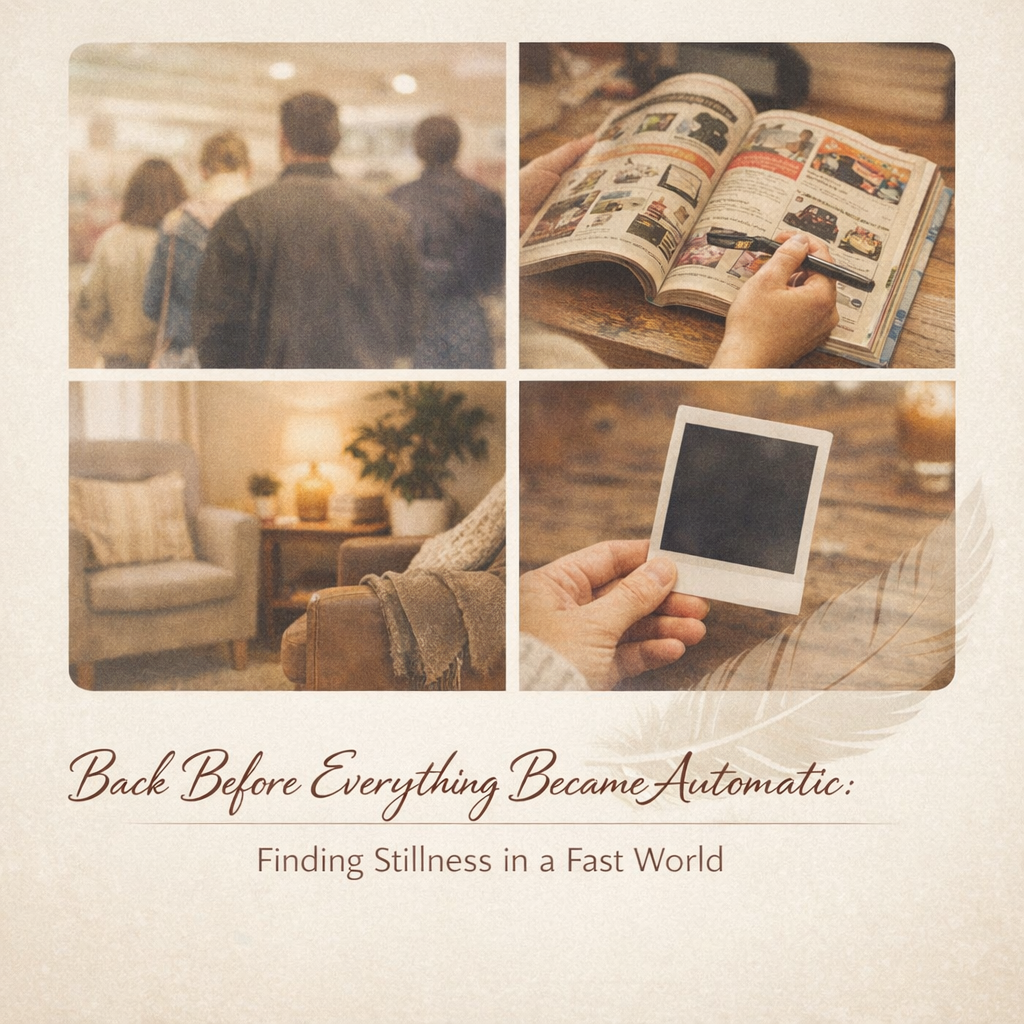
Back Before Everything Became Automatic: Finding Stillness in a Fast World

Something that has been playing on my mind for a while is how instant everything has become. If we want an answer, we Google it. If we need therapy, we can speak to an online counsellor within minutes. Some people even turn to TikTok therapists or ask ChatGPT for guidance. We’re surrounded by instant opinions, instant advice, instant solutions. And while these things can offer ideas or reassurance, they can’t replace the slower, deeper process of sitting with ourselves, noticing what we feel, and understanding what those feelings mean.

I’ve also been thinking about how the power of CBT comes in when we allow ourselves to sit with what we’re feeling. Not rushing to fix it, not searching for the quickest answer, but gently noticing our thoughts and emotions and what they’re trying to tell us. This actually aligns so closely with the work I do as a person‑centred counsellor creating space to explore, rather than pushing for a solution. I’ll be honest, I’ve found this difficult at times in my own life. There have been moments where I’ve wanted the answer immediately or wanted something to take the discomfort away. But sitting with myself, even when it’s uncomfortable, has taught me so much more than any instant answer ever could.

And although I miss the waiting and the anticipation, I also find it hard to sit with it at times. Just because something is difficult doesn’t mean it isn’t wise or healthy. Sometimes we need to sit within the unknown to feel what it’s like not to have the answer yet, not to know what comes next, and to let things unfold organically. It’s uncomfortable, and I’m not immune to that discomfort. But I’m learning that the unknown has its own lessons, its own pace, and its own quiet wisdom.

I’ve had a lot of time to reflect lately, and while driving the other day Automatic by Miranda Lambert came on. It really made me miss having to wait being patient having the time to decide whether the thing I absolutely must have is actually something I need in my life.

Person‑centred counselling invites us to be in the moment, to get to know ourselves as we are right now. That song made me reflect on my past and how much I miss some of the simplicities of being a young adult. How would it feel to go back to those times? To not have same‑day delivery? To flick through the Argos catalogue, circle the thing we wanted, write the code on the little slip, and wait our turn to see if it was in stock. I miss that small ritual. I wonder if I’m on my own in that, or whether you feel something similar.

Life felt slower when things weren’t instantaneous. There was more community. Now so much of our communication happens through email, Zoom, or text. I’m not saying one way is better than the other having things at our fingertips can be incredibly useful but I’m noticing the difference.

In the counselling room I encourage clients to slow down and reflect on their thoughts and feelings in the moment. Slowing down during anxiety or difficult times can help us understand what’s really going on for us. Taking things gently and gradually can bring longer‑term comfort. It reminds me of waiting in line at Argos as a child for a toy I’d saved up for, only to hear it was out of stock and I’d have to wait for the next delivery. Patience is something I’ve learned to appreciate sometimes through gritted teeth and a strained smile and I often see similar emotions and explorations in the counselling room. It’s a space I feel extremely privileged to be in.

All of this reflection brought me back to grief. Grief isn’t always about losing a person. It can be about anything we miss or struggle to accept has changed. I truly miss parts of my world I no longer have access to, or ways of living that have simply moved on. I miss writing letters and waiting for a response. I miss the landline ringing and everyone wondering who it might be for. The magic of waiting and wondering seems to have faded, replaced by the magic of how quickly things arrive.

What I keep coming back to is the pace of the counselling room, the slowing, the softening, the moment a client relaxes into the chair. The beauty of patience, wonder, and quiet magic when someone begins to see their hard work supporting them outside the room.

There’s something about Automatic that stayed with me long after the song finished. Not the words themselves, but the feeling that gentle reminder of a time when life unfolded at a slower pace, when waiting was part of the rhythm rather than something to avoid. It nudged me to notice what I miss, what I value, and what I want to carry forward.

Person‑centred counselling offers that same kind of slowing.
A space where nothing has to be instant.
A space where you can arrive exactly as you are.
A space where your pace is the right pace.

I see the magic of that when I work with clients the way someone softens into the chair, the way their breathing steadies, the way understanding grows slowly, quietly, in its own time. It’s a privilege to witness that kind of patience and courage.

So as the world continues to speed up, I’m choosing to honour the moments that ask to be taken gently. To wait in the queue. To print the photos. To sit with myself. To welcome the parts of life that aren’t automatic at all.

And perhaps, as you read this, you might take a moment to notice what you miss what you long for, what you’d like to reclaim, or where you might welcome a little slowness back into your own life.

Sometimes the most meaningful changes grow in the waiting.

And if you have a love for music, are curious about what inspired this reflection, or simply enjoy discovering new songs, I encourage you to give Automatic a listen. It might stir something in you too.

Take Care, Nicole x

Categories
Community Mental Health Person Centred Counselling

In a World Where You Can Be Anything: Kindness in and Beyond the Counselling Room

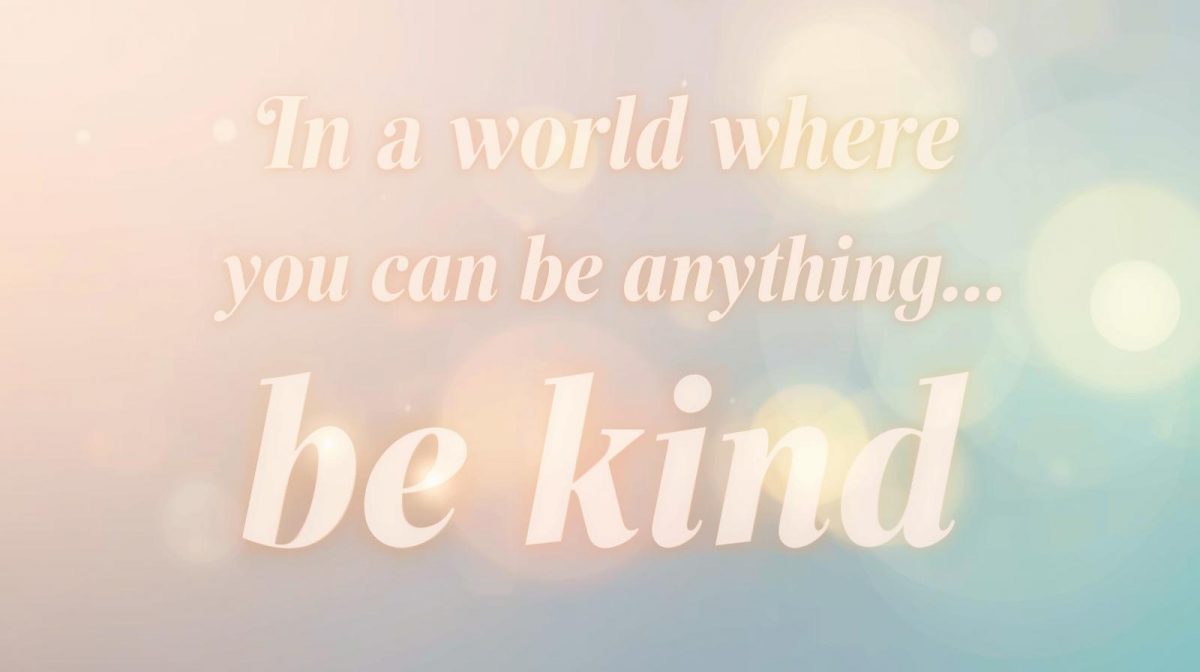
I watched the new Caroline Flack documentary recently, and ironically, as I write this blog, it is also World Kindness Day. One of the messages she left behind , one that continues to echo for many people, is the reminder: “In a world where you can be anything… be kind.”

As a human being and a person-centred counsellor, kindness and empathy are central to the way I try to move through the world. I offer these values to others, and  myself too. Yet we live in a world where kindness isn’t always freely given, whether in person or online. We rarely know what is happening for someone else. On the surface they may beam with a beautiful smile, yet beneath it something entirely different may be unfolding.

Some of us now live our lives through the lens of a camera, especially when our work depends on visibility. That visibility brings connection, creativity, and opportunity, but also vulnerability. It leaves people open to judgement, assumptions, and sometimes even threats. It can feel claustrophobic. And as easy as it is to be pulled into sharing an opinion, it’s equally easy to slip into doom scrolling, absorbing what people appear to think about “you.” But are they seeing you at all? Or just a single, curated sliver?

This is the opposite of what happens in the counselling room. There, you are welcomed exactly as you are. No judgement. No expectations. No conditions. Within the person-centred approach, unconditional positive regard, empathy, and congruence shape the relationship. For an hour, clients can be themselves: honest, vulnerable, free from the pressure to perform. They are met with understanding, not assumptions.

As opinions travel faster than compassion, days like World Kindness Day ask us to pause and truly see another person.

Behind the Screen

We’ve all scrolled through social media and thought:
“They look so happy… I wish my life was like that,” or
“Their job must be amazing; everything seems so easy.”

I’ve had those thoughts too.

But I often wonder what life feels like once the camera is off. What remains when the door closes, the makeup is removed, and the smiling public persona fades? Because mental health exists there too,behind the filters, behind the edited clips, behind the headlines.

Public figures carry the weight of being watched and commented on by strangers. The pressure to perform or appear “OK” must be exhausting. Scrutiny from trolls, fans, and media stories built from fragments creates a world where privacy can feel shaky, and safety uncertain. A curated smile doesn’t protect against loneliness, anxiety, or vulnerability. Those parts rarely make it into the final cut.

Fragmented Stories: What We Don’t See

Social media gives us connection, but it also gives people permission to judge quickly and loudly. Recently, I’ve noticed how easily we slip into becoming online detectives or critics, even when we know almost nothing about the person behind the post.

I often use the analogy that our story is like a jigsaw puzzle: it takes many pieces to show the full picture. And when pieces are missing, the image can’t be fully understood.

Online, we see only the pieces people choose to show often not the most important ones. The media may see only 10 pieces of a 100-piece puzzle, yet from those few fragments, entire narratives are created. The gaps get filled with assumptions or speculation, sometimes even fiction. This creates conflict, misunderstanding, and unnecessary hurt.

And I often wonder whether the people crafting these narratives truly pause to consider their human impact.

Parallels with the Counselling Room

Here, the contrast to counselling becomes even clearer. In therapy, instead of judging based on fragments, we explore the full picture gently, at the client’s pace.

Person-centred counselling offers:

  • Unconditional Positive Regard: acceptance without performance

  • Empathy: entering someone’s inner world without presumption

  • Congruence: a genuine, honest presence

Clients don’t have to curate a version of themselves that makes sense to others. They can show the hidden pieces of their puzzle, even the ones they’ve avoided. The messy pieces. The painful ones. The uncertain ones.

In a world that judges instantly, the counselling room becomes a rare space where someone is truly seen.

What Does Kindness Mean to You?

I often return to this question: What does kindness mean to you?

To me, kindness is not a hashtag or a performance. It isn’t dependent on whether someone “deserves” it. It’s a way of living  a practice.

Kindness means offering gentleness even when it isn’t returned. It means remembering that I have no idea what someone else is carrying beneath the surface. And if I can offer compassion, I hope it might make even a small difference to their day.

As I’ve grown older, I’ve realised kindness looks like:

  • thinking before I speak

  • listening without judgement

  • understanding that we are all different

  • accepting that I will not always get it right

But I try — and I try unconditionally.

A Final Reflection

Writing this has been harder than I expected. There is much more I could say, but I want to speak with care, knowing this topic touches real lives and real pain.

We cannot know every story behind every smile, post, or headline.

But we can choose how we meet those stories, with empathy, patience, and kindness.

And perhaps this is where the counselling room serves as a guide. The way we hold space for clients, gently, without assumptions, without needing the full picture before we offer acceptance, is something we can carry into the world around us.

In a world where you can be anything, let us be kind 
to ourselves, and to others, especially when we cannot see their whole story.

Take care, Nicole


Categories
Anxiety Person Centred Counselling Travel

When Excitement Meets Anxiety: The Real Feelings of Travel


The Allure of the Perfect Holiday

My social media algorithm picked up very quickly that I was planning a trip to New York to celebrate my birthday (21 again, of course!). What this gave me was the perfect itinerary, the perfect places to eat, the viral shops I had to visit, and endless videos of holiday goers smiling, stress free, and simply loving life.

Now, I’m absolutely sure many of those people did have an amazing time. But what I didn’t see was the preamble, the waiting for the ESTA to come through, the frantic packing, the wondering if they had enough spending money, the airport security queues, the fear of oversleeping before an early flight.

I couldn’t help but wonder, did any of those people feel anxious before, during, or after their perfect looking break?

The build up to my own holiday became a quiet obsession, scrolling for new “must see” spots, trying to plan the perfect trip. I had wanted my New York break to be more spontaneous, to stumble upon landmarks, to find an event by chance, and not to live by a tight itinerary. But the constant exposure to “perfect plans” on social media subtly changed my outlook.

I still had a few places I truly wanted to visit, but I wanted the rest to unfold authentically, a bit like person centred counselling, really. Being in the moment and fully present is so important, both in therapy and, as I’m learning, in travel too.

The Emotional Build Up

I’ve always been a traveller. I love visiting new places, soaking in the culture, and meeting new people. I grew up on family holidays, but my first experience of travelling alone was around age 14 or 15, flying to Canada to visit friends I’d met at a family wedding.

That trip introduced me to a range of feelings, ones I hadn’t really explored until recently, when I felt ready to be authentic with myself. Through my understanding of theory and my own personal growth, I’ve found the confidence to speak these feelings out loud.

Truthfully, I have anxiety about travelling. The packing, the endless passport checks, the security queues, all mix with the excitement of going away, the joy of good food and drinks, and that liberating sense of not caring about calories (they don’t count on holiday, right?).

All of these emotions can form a physical knot in my stomach. And for a long time, I didn’t know what to do with it. I certainly didn’t feel I could say, “I get anxious about going on holiday”, it sounded silly. Who feels anxious about something so exciting?

What I’ve realised is that I was being incongruent, not genuine with myself. I was trying to sell myself a lie. This idea of a perfect holiday didn’t fit into my world.

Carl Rogers, the founder of Person Centred Theory, speaks about the tension between our perceived reality and our actual experience. When something feels off, it’s important to pause and really notice what we’re feeling, to be honest with ourselves. That’s how we begin to live as our authentic, organismic self.

Anxiety appears, even though society suggests it shouldn’t. Exploring that truth is part of self actualisation, the ongoing process of becoming the fullest version of ourselves.

The In Between Moments

You might be reading this thinking, “Why does she even go on holiday if it causes her so much unrest?”
The truth is, these anxieties are fleeting, they don’t last long, but they’re important to acknowledge.

Once the hustle and bustle of check in and security is behind me, I start to relax. I love the smell of Duty Free, that’s where the holiday truly begins. The “no time zone” pint, the browsing through airport shops, finding the gate, and finally boarding.

As I settle into the plane, the pressure leaves the body. The excitement and wonder begin to creep in. Presence begins to settle in, noticing what’s around me, truly listening and engaging in conversation.

Now the films, the food, the drinks, and of course a nap can be enjoyed.

It’s in these moments that authenticity aligns with the experience. This is one of the core conditions of person centred counselling, the genuine presence that helps clients feel safe to be authentic too.

A Note on Phenomenology

This sense of presence also links beautifully with phenomenology, the idea that each person experiences the world through their own unique lens. Rogers believed we can only truly understand someone by entering their phenomenal field, their lived, subjective experience.

When sitting on the plane or wandering through a new city, the world is not seen through a camera lens or someone else’s itinerary. It is experienced through senses, emotions, and meanings.

Phenomenology reminds us that being truly present means honouring our own lived experience, without comparison or judgement. Whether as counsellors or travellers, that’s what it means to meet ourselves and others exactly where we are.

The presence and genuineness continue for most of the adventure. Observing how people live and work in the environment experienced as a break, taking in culture, architecture, and rhythm of life is enjoyable.

The energy of a city or the peace of a beach brings a sense of calm and excitement. Time spent with a partner, away from the rat race, felt especially needed given recent changes and upheaval.

Homesickness and the Ending

One thing recently self confessed is being a home bird. Growing up, it was difficult to be away from parents, a night at grandparents often meant tears and very little sleep.

Now, as an adult, home is a sanctuary. Being away from comforts, bed, routine, familiar surroundings can still be difficult. But as each holiday ends, it feels like Stretch Armstrong, part yearning for home, part resisting the end of something loved.

Those moments bring mixed thoughts, don’t want this experience to end, will things feel different on return?

These thoughts are met with kindness and unconditional positive regard. They are acknowledged. Conflict, love, and longing are allowed space.

Loving and hating the thought of coming home is not a contradiction. It’s just being human.

Bringing It Home

The purpose of this blog is to normalise anxiety around excitement, it’s okay to experience both. Excitement and anxiety can coexist, sometimes simultaneously.

For years I saw anxiety as a negative. Now I realise it can be used as a tool, like an internal risk assessment if you like, showing when attention is needed while allowing me to stay in control and not let it spiral.

Allowing all emotions to exist without judgement is essential. Each individual experiences situations differently, for some it brings joy, for others unease. Both are perfectly okay.

Social media can be both a blessing and a curse. When scrolling through perfect travel clips, it’s natural to wonder, what’s really behind the lens? Remember, a holiday doesn’t need to be perfect to be meaningful. By embracing both excitement and anxiety, staying present, and being kind to yourself, every trip can become a genuine, memorable experience. 

Take Care, Nicole 

Categories
Community Person Centred Counselling

Be Your Own Pace Car: Finding Community at Caffeine & Machine

If I said the word community… what would it mean to you? For me, it can mean anything—a friendship circle, a hobby group, or even a mental health support network. But what about a community of strangers united by a love for cars, automotive culture, and conversation?

My partner recently introduced me to Caffeine & Machine, and what I discovered there warmed my heart—not just as someone observing car culture, but as the founder of As Light As A Feather Counselling, based in Huddersfield, West Yorkshire, noticing the power of human connection.

A Place for Everyone

I’ll admit upfront: I know very little about cars. To my partner and his dad’s amusement, my expertise goes as far as, “Oh, that colour would make a fantastic nail polish.” But I do understand people, and I recognise what makes a community thrive.

Caffeine & Machine is more than a car community in the UK. It’s a welcoming space for people who sometimes find it hard to connect, as well as for those who simply love cars. Conversations often start with cars, but they frequently grow into something deeper—friendships are formed, bonds strengthened, and emotional burdens shared and halved.

This mirrors what I strive for in my work at As Light As A Feather Counselling: creating spaces where people feel safe, accepted, and heard, allowing them to express themselves without judgement.

The Roots of Caffeine & Machine

Founded by Phil McGovern and Dan Macken in 2015, Caffeine & Machine started with a simple vision: to bring car enthusiasts together in a way that breaks down barriers and celebrates inclusion.

The Hill in Warwickshire opened in 2018 and has since become an iconic location for automotive culture. Surrounded by greenery, it’s a place to wander, relax, and recharge. Whether you want to soak up the sun or retreat to the fab on-site teepee, it’s designed for comfort and connection.

Since then, Caffeine & Machine has expanded with two further venues: The Bowl and The Hut, each carrying the same ethos of community, connection, and shared passion for cars and machinery.

I Love You, Man: A Safe Space for Men

Phil noticed that mental health, especially in men, was becoming a growing concern. In response, he created I Love You, Man, a monthly event offering a safe, unrecorded space where men can share openly, listen, and simply exist without judgement.

While I haven’t personally attended, it’s easy to imagine that attendees leave feeling lighter, understood, and supported—mirroring the trust and acceptance I cultivate in my counselling work. This event embodies many person-centred counselling principles: empathy, unconditional positive regard, and the creation of a safe, non-judgemental space. People can speak, or just listen—they can be vulnerable without fear.

Feels Like Home

After visiting The Hill a couple of times, as we drove away, we both said it “feels like home”—not knowing that it’s actually one of Caffeine & Machine’s slogans. The feeling was undeniable: hundreds of people come each day and leave feeling safe, seen, and connected.

In counselling terms, this is exactly the type of therapeutic home I aim to create at As Light As A Feather Counselling—a safe space where trust is established, and people can be themselves, free of masks or pretences.

Community and Counselling: A Shared Philosophy

Community is at the heart of both Caffeine & Machine and counselling. Like a counselling room, the venues foster trust, safety, and presence. Their mission says it best:

“…a place to enjoy wonderful food and drink, soak up an ever-eclectic display of brilliant machinery, and above all else, come be around friends…”
“We seek to break down barriers, encourage conversation and discovery.”

Being part of this community is therapeutic in itself: sharing, listening, and connecting all contribute to mental health and emotional well-being. It demonstrates how supportive spaces in everyday life—even outside a counselling room—can nurture mental health support.

More Than Just Cars

While my partner admired the eclectic mix of old and new vehicles, I noticed the human side: strangers connecting, stories shared, laughter, and new friendships forming. People who might normally struggle to engage with others found themselves part of something bigger.

And of course, the food and drink are amazing: homemade pizzas, loaded fries, poke bowls, and the weekend BBQ tray (chef’s kiss), all washed down with the famous Hawkstone lager. Community nourishes both body and mind.

Be Your Own Pace Car

Caffeine & Machine proudly declare, “We Are The Pace Car.” They set the tempo for culture, community, and conversations around the things we love that move.

But that message is also for us personally. To me, it means: be your own pace car. Set your rhythm, follow your flow, and lead your journey. Slow down when you need to, regroup, and move forward again. That’s what feels like home—and it’s the same philosophy I bring to every session at As Light As A Feather Counselling.

Support and Links

If reading this resonates and you feel you could benefit from counselling, I’m here to support you at As Light As A Feather Counselling. Whether you’re navigating mental health challenges, feeling isolated, or simply need someone to listen, you can reach out via the links on my website. Safe, confidential, and supportive spaces exist to help you be heard, understood, and valued.

For more about the Caffeine & Machine community and events: Caffeine & Machine
Learn more about the origins of their mental health initiative: I Love You, Man – An Origin Story
Additional men’s mental health support can be found at: Andy’s Man Club

Take Care, Nicole

Categories
Change, Anxiety Grief Person Centred Counselling

Mixed Emotions and Positive Change: How to Process Life Transitions

Positive Change and Hidden Feelings

Have you ever received news that society tells you should have you cartwheeling with happiness — popping champagne, celebrating with friends and family — but instead felt something more complicated? You know deep down it’s what you want, yet there’s an overwhelming sense of, oh wow — my whole world is about to change.

I know I want this, but how much? Then your mind may begin catastrophising — urging you to stay in the familiar, keep to the easy routine, and avoid putting yourself in a vulnerable position. Why would you risk all of that? Our inner critic, or even imposter syndrome, often shows up when big life changes are presented to us.

It’s important to normalise this. We can feel both grateful for new opportunities and experience anxiety, doubt, or worry. Mixed emotions don’t mean we’re ungrateful — they mean we’re human.

A lot of my writing ideas come from things I have seen, read, or experienced myself. For example, my 9–5 job will be changing soon. I’m excited to return to a role I enjoy, but this comes with leaving my comfort zone, colleagues (some of whom are now good friends), and facing a two-hour round-trip commute. On top of that, I’ve also just sold the home I’ve lived in for 17 years (blog on this to follow) 

Right now, my life feels like a deck of cards tossed into the air — suspended mid-flight, waiting to land. Each card represents a different part of life in transition. At the same time, I feel like I’m holding the ingredients for a layered cake: each emotion — excitement, anxiety, sadness, pride — is a layer contributing to the whole experience of change.

The Emotional Layers of Change

Change often comes with many layers of emotion — much like baking a cake. Each layer adds something unique, creating a rich, complex experience:

  • Excitement: the sweetness of something new.

  • Anxiety: the bitter edge of uncertainty.

  • Sadness: the nostalgia of leaving routines, colleagues, friends, or familiar places.

  • Pride: the richness of knowing you’ve faced challenges and embraced growth.

Together, these layers might feel confusing, even overwhelming, but each one has a purpose. Like a cake, the layers combine to form a complete experience — one that is fuller and more textured than any single layer could be on its own.

This also connects to grief. Grief isn’t only about losing people — it can also involve saying goodbye to a chapter of our lives, a period of identity, or the comfort of a familiar home or routine. Just like the layers of a cake, each feeling — sadness, anxiety, excitement, pride — has its place and adds depth to the whole experience.

Why Mixed Emotions Can Feel Confusing

One of the most challenging parts of change is that society often expects constant joy. When sadness, doubt, or anxiety appear alongside happiness, we may feel guilty or “wrong.”

Using the cake metaphor, this can feel like tasting all the layers at once: the sweetness, the bitter, the richness — it can be confusing, even overwhelming. Yet each layer is meaningful and contributes to understanding ourselves and the situation.

Over time, I’ve realised these emotions are helpful. They are part of our mind’s way of assessing change — weighing risks, considering positives and negatives, and preparing us for what lies ahead. The inner critic or imposter syndrome can make this feel overwhelming, but the underlying process is natural and important.

All feelings are valid. Even when they seem contradictory, they provide insight into your experience and help you navigate change more mindfully.

Change, Growth, and the Person-Centred Counselling Room

In person-centred counselling, every individual’s response to change is recognised as unique. Carl Rogers described the actualising tendency — the innate capacity for growth and self-understanding. This means that even when we feel anxious or uncertain, there’s an inner resource already at work, guiding us.

The counselling room offers the conditions for this growth: empathy, congruence, and unconditional positive regard. Here, clients can:

  • Explore emotions at their own pace.

  • Understand and integrate conflicting feelings, layer by layer.

  • Feel truly heard without judgement or pressure.

Just as the layers of a cake combine to create something whole, counselling allows the layers of your emotional experience to be acknowledged, understood, and integrated — giving a sense of clarity and completeness, rather than confusion or pressure to “just be happy.”

Gentle Reflection To Close 

As I bring this writing to a close, I want to remind you (and perhaps myself) that mixed emotions around change are normal. They are part of being human. Working through them — whether through reflection, conversations with friends or family, or counselling — helps integrate these experiences in a healthy way.

Think of your emotional layers like a cake: each one is valid, each one contributes to the whole, and each one can teach you something about yourself.

A question to leave with you: What changes in your life have brought both excitement and sadness? How did you navigate these emotions?

If you’d like space to explore changes in your life at your own pace, I offer a safe, person-centred space at As Light As A Feather Counselling in Huddersfield where all feelings are valid and welcome.

Take care,
Nicole 

Categories
Person Centred Counselling Walking and Mental Health

Conversations on the Move: Walking, Talking, and Supporting Mental Health

On 17th August 2025, Steven Gregson embarked on a remarkable journey — walking from St George’s Square to Castle Hill and back, not once, but seven times. Starting at 6am, he completed the challenge, raising £1,174 for Men Walking and Talking — surpassing his £1,000 target. 

I had the privilege of joining Steven on one of these seven trips. It wasn’t just a walk; it was an opportunity to connect, listen, and reflect — the kind of connection that underpins mental well-being.

About Men Walking and Talking

Founded in 2021 by Dan Reid, Men Walking and Talking began with a single walk in Telford. Inspired by his own struggles with anxiety and depression, Dan sought to create a space where men could connect, share, and support each other. What started with one group has now expanded to 44 walks across 21 counties, becoming a Community Interest Company (CIC) in 2022 and an organisational member of the National Counselling and Psychotherapy Society (NCPS) in 2023.

The Huddersfield group, led by Steve Gregson, offers weekly walks every Monday at 6:30 pm, starting at the Harold Wilson statue in front of Huddersfield Train Station.

 Podcast in Motion: Making Excuses

During the challenge, a podcast episode was recorded live with Julian from the Making Excuses Podcast. The podcast captured conversations, reflections, and stories along the walk, highlighting the importance of talking openly about mental health. This reinforces the ethos of Men Walking and Talking — connecting through shared experiences, creating safe spaces for dialogue, and inspiring others to open up.

Walking and Talking: A Personal Perspective

Walking alongside Steven for one of his seven trips gave me a unique insight into the incredible work being done by Men Walking and Talking. Every step was a reminder that shared conversation, empathy, and presence can be profoundly supportive for mental well being.

We also reflected on the broader challenges faced by mental health charities today. Some organisations are struggling financially, even as demand for mental health support continues to rise. In this context, it is more important than ever for mental health charities and businesses to collaborate, sharing resources, knowledge, and encouragement to support those in need.

This experience reflects the values of As Light As A Feather Counselling. Just as Steven’s walk created a safe space for reflection and connection, my counselling sessions provide an environment where clients can explore their thoughts, share their stories, and feel truly heard. Walking with Steven was a live demonstration of how healing can happen through presence, dialogue, and support — the very principles that underpin person-centred counselling.

The Power of Walking and Talking

What struck me most during the walk was that Steven wasn’t alone. He was accompanied every step of the way, reflecting the ethos of Men Walking and Talking: connection, support, and being present for one another.

This mirrors the core principles of person-centred counselling, the foundation of As Light As A Feather Counselling. In counselling, talking is not just about solving problems — it’s about being heard without judgement, feeling supported, and exploring thoughts and emotions at your own pace. Just as Steven’s walks allow men to open up in a safe, shared space, counselling provides a structured environment where meaningful reflection and personal growth can happen.

“A conversation can be the start of change.” – Unknown

By walking, talking, and even recording a podcast together, people experience the healing power of connection — the very essence of emotional well-being.

🌟 Reflecting on the Milestone

Steven’s challenge was more than a physical milestone; it was a powerful reminder of the importance of support, connection, and community in mental health. It highlights that no one should face their struggles alone, whether on a walk up Castle Hill, in life’s challenges, or through conversation on a podcast.

If you’re in Huddersfield and want to explore how talking can help you process thoughts, reduce anxiety, or simply feel heard, I offer a safe, non-judgemental space at As Light As A Feather Counselling. Just like Men Walking and Talking, counselling is about walking alongside you — supporting you every step of the way.

Men Walking and Talking Huddersfield meet every Monday at 6:30pm starting at the Harold Wilson Statue, St Georges Square. Men Walking and Talking – Huddersfield (Facebook)  

To support Men Walking and Talking, visit their official website www.menwalkingandtalking.co.uk

Take Care, Nicole 

Categories
Grief Person Centred Counselling Silence

Silence in Counselling: How Pausing Can Help Reduce Anxiety, Overthinking, and Support Healing


©2024 As LIght As A Feather Counselling is powered by WebHealer